


This exclusive article was built in collaboration with Chris B. Writes, who implements these strategies and tips every Tuesday during his Substack live show called Typing It Real.
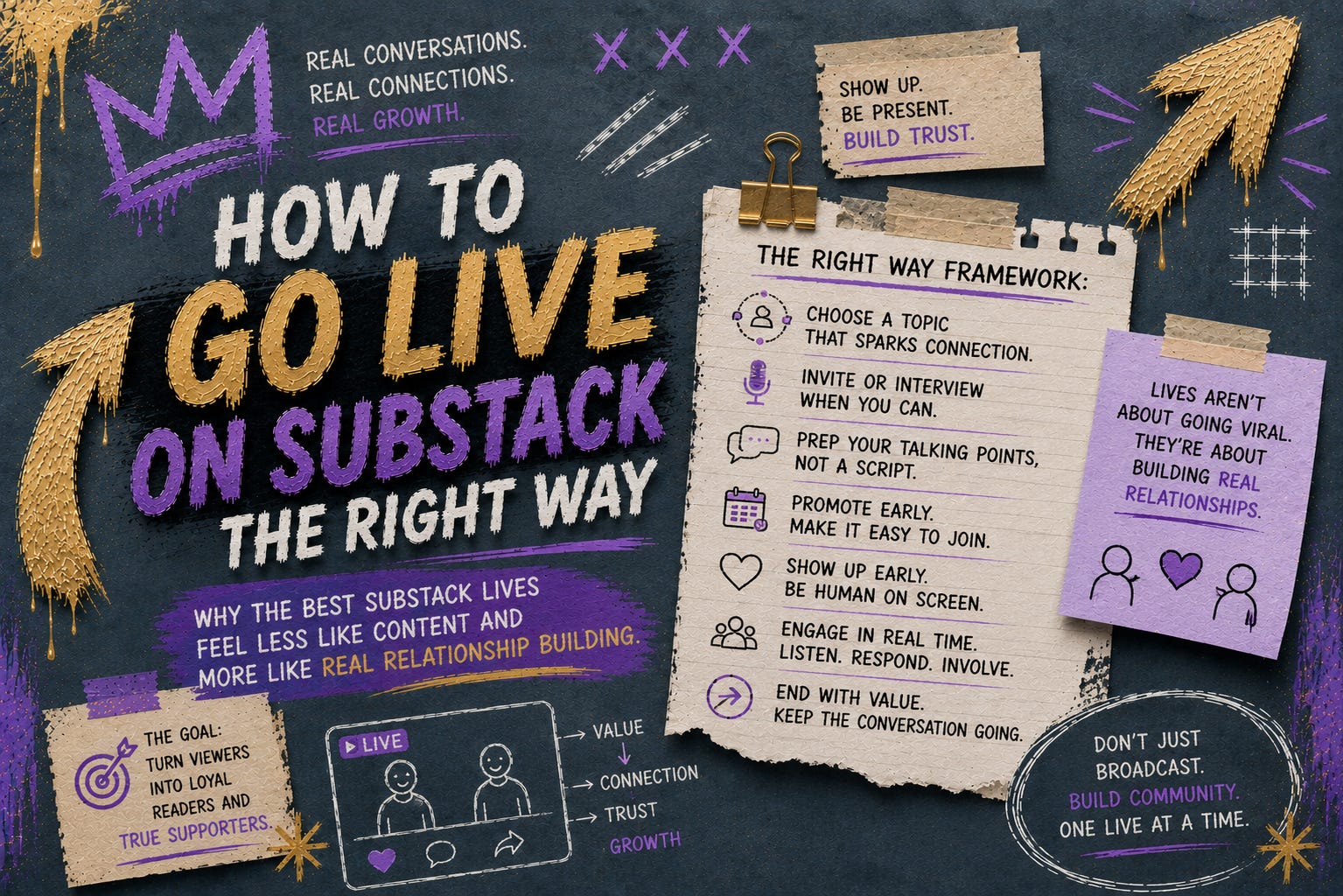
The best Lives aren’t performances. They’re proof that there’s a real person behind the publication.
Most creators think going live on Substack is about broadcasting.
You schedule a Live.
You invite someone on.
You talk for a while.
You post the replay.
Done.
And technically? Sure.
But that’s also how you end up with a replay nobody watches, a thumbnail that looks like a hostage screenshot, and a conversation that feels like it could’ve been an email with better lighting.
After going live with Chris B. Writes last week on his show Typing It Real, I started thinking about Substack Live differently because the best Lives aren’t just “video content.”
They let people experience you.
Your pace.
Your humor.
Your thinking.
Your chemistry with another creator.
The way you answer when you don’t have ten rounds of edits protecting you.
That’s the opportunity; not performance.
Trust. In real time.

The Live That Changed How I Think About Going Live
Chris hosted me on his Substack show:
Typing It Real: From Unstuck to Published, Owning Your Health & Being A Substack Powerhouse With Jess, The Creator
We went live for nearly two hours.
We talked about Substack strategy, building publications from scratch, Unstuck to Published, my NP Fellow origin story, how Chris and I first connected on Substack, how we became close friends through the platform, and how I helped him refine both of his Substack publications.
It wasn’t polished within an inch of its life and it wasn’t two people reading questions off a doc and pretending that was chemistry.
It was a real conversation between two creators who actually had a reason to be in the same room.
That’s why it worked.
Most Substack Lives Fail Before They Even Start
Not because the creator is bad on camera.
Not because the topic is boring.
But, because nobody needed the conversation to happen.
Two people hit “Go Live,” vaguely talk about writing, creativity, consistency, growth, or whatever the creator word soup of the week is, and then post the replay like the internet was waiting breathlessly.
Nope.
A strong Live needs a reason to exist.
Before you go live, ask:
Why should someone spend 30, 45, or 90 minutes here?
The answer cannot be:
“Because we’re chatting.”
Chatting is what happens when the structure is weak.
A good Live should help the audience understand something better, feel closer to you, learn something they can use, or see a side of you they’d never get from a regular post.
That’s what makes people stay.
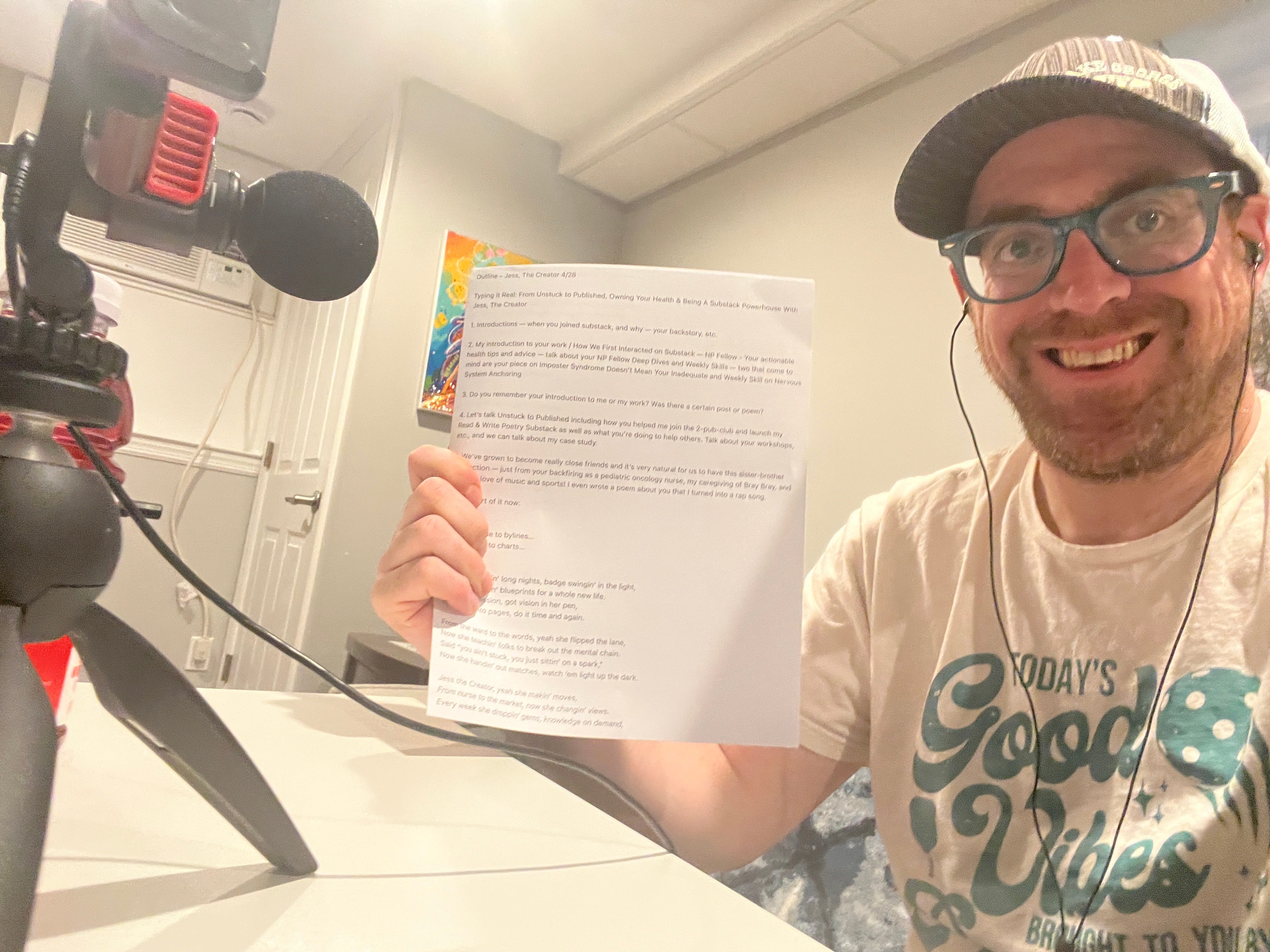
Why Chris’s Live Worked
Chris didn’t just invite me on because we’re friends.
That would’ve been cute.
Cute isn’t enough.
He created a clear container for the conversation.
His audience already knew him. My work naturally connected to his Substack growth journey. We had real history on the platform.
And the conversation had layers: writing, health, publishing, strategy, friendship, audience-building, and what it actually looks like to grow on Substack when you’re not pretending the whole thing is effortless.
Chris brought the relationship.
I brought the strategy.
Together, the conversation became useful, personal, and memorable.
That’s the sweet spot.
A good Live doesn’t need to be perfectly scripted, but it does need a reason.
The Best Lives Feel Like You’re Letting People In
Writing shows people your ideas.
Live shows people how you think.
That difference matters.
A post can be edited, rearranged, softened, tightened, cleaned up, and polished until it sounds like you on your best behavior.
A Live is different.
People see how you respond.
How you listen.
How you build on someone else’s thought.
How you explain something when you can’t hide behind formatting.
How you handle a tangent.
How you laugh.
How you recover.
That builds trust in a totally different way.
Some of my strongest relationships on Substack haven’t come from posting more.
They’ve come from conversations.
That’s what Live can do when you use it well.
1. Before You Go Live, Give It A Job
Don’t open the camera and hope the content gods descend from the ceiling.
They won’t.
Start with a clear purpose.
Your Live can be an interview, a publication audit, a teaching session, a behind-the-scenes conversation, a reader Q&A, or a collaboration with another creator, but it needs a point.
For Chris and me, the point was clear:
We were talking about Substack growth, publication-building, and what it looks like to go from unstuck to published in real time.
That gave the conversation direction.
Not a cage. A spine.
There’s a difference.
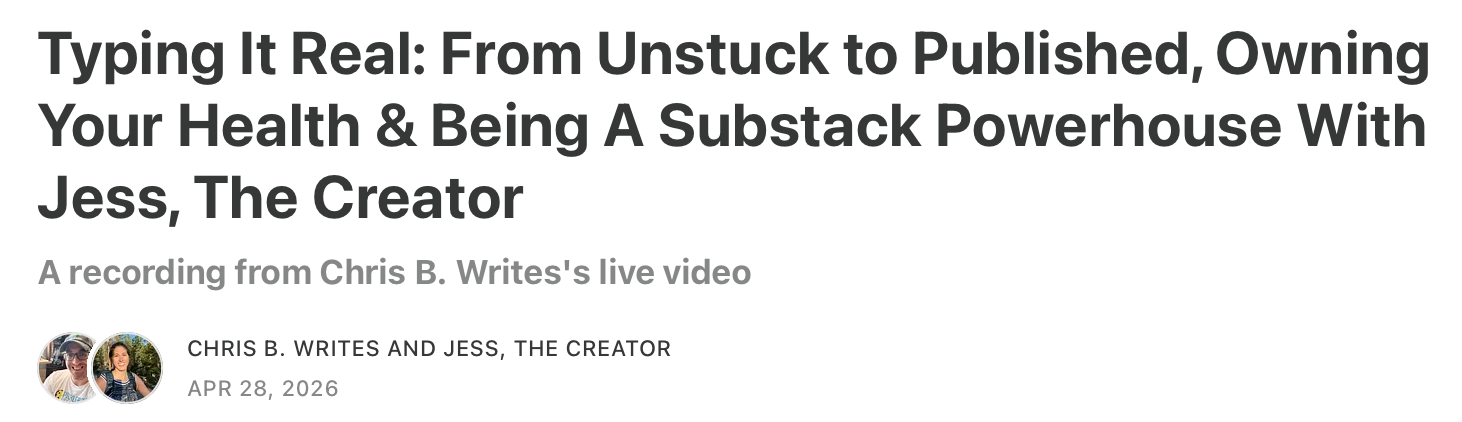
2. Give The Live A Title That Actually Works
Please don’t title your Live something like:
“Chatting with Jess”
That tells people nothing.
Chatting about what?
Why should they care?
What will they walk away with?
Why now?
Make the title do some work.
Chris’s title worked because it named the value:
From Unstuck to Published, Owning Your Health & Being A Substack Powerhouse
That gives the audience a reason to show up.
They know the conversation is about publishing, growth, health, and building something real on Substack.
A good Live title should make someone think:
“I know why I’d watch this.”
That’s the bar.
3. Promote It Beforehand
Don’t assume people will magically find your Live.
They aren’t sitting around refreshing Substack with a tiny little party hat on, waiting for you to appear.
Use Notes.
Use a short announcement post.
Tell people when it’s happening, who’s joining, what you’ll discuss, and why it’s worth attending.
A simple pre-Live Note could be:
I’m going live with Chris B. Writes this week to talk about Substack growth, publication clarity, and what it actually takes to build a paid-ready publication.
Come hang out with us live.
That’s enough.
Clear beats clever here.
4. Choose The Right Co-Host
A good Live collaborator isn’t just someone with an audience.
It’s someone with natural overlap.
That overlap matters because the best collaborations don’t feel like borrowed attention. They feel like a bridge between two worlds that already make sense together.
Chris and I made sense because he’s building and refining his publications, I help creators build their Substacks with more structure, we already had a real relationship, and both audiences care about writing, publishing, and growth.
That’s why the conversation didn’t feel forced.
If the relationship is real, the Live feels real.
If the relationship is flimsy, the audience can smell it.
And they will leave.
5. During The Live, Don’t Strangle The Conversation
Have a loose structure.
Then, let the conversation breathe.
A strong Live needs direction and room for honesty.
You want the audience to feel like they’re watching something unfold, not watching two people recite a shared Google Doc with dead eyes.
A few things help:
Start with a clear introduction.
Remind people what the Live is about.
Let the guest share their story.
Keep bringing the conversation back to the main theme.
Give people something useful to walk away with.
And please, use good audio.
Bad video is survivable, but bad audio isn’t.
Use earbuds or a microphone if you can. It makes a bigger difference than people think.
After The Live Is Where Most Creators Waste The Whole Thing!!
This is the part Chris emphasized and he was right.
Most creators finish the Live, breathe a sigh of relief, publish the replay, and move on.
That’s where they lose value.
Your replay is not just a replay.
It’s an asset, but only if you treat it like one.
If you post a raw recording with no framing, no links, no title cleanup, no context, and a cursed thumbnail of you blinking mid-sentence?
You’re making people work too hard and they won’t.
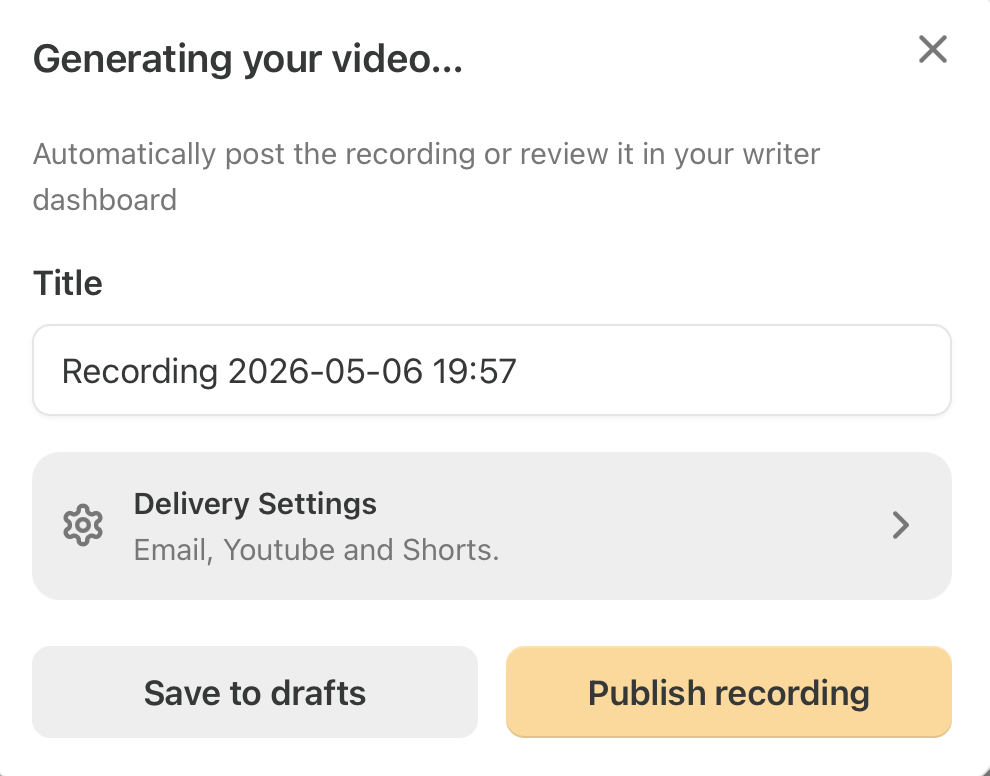
6. Review The Draft Before Posting
After the Live ends, choose:
“Review Draft on Web Before Posting”
Do this before publishing the full recording.
*IMPORTANT: Make sure you educate your co-host and tell them to also select “Review Draft on Web Before Posting”
Then, explain to them that you will post it with all the bells and whistles added and they should CROSS POST your version rather than post their own separately.
That one step gives you a chance to turn the replay into a real post instead of dumping a video into your publication like a suitcase in the hallway.
You can add a stronger title, a better intro, timestamps, related links, subscribe buttons, relevant articles, calls to action, and a cleaner thumbnail.
That context matters.
A replay with no framing is easy to skip.
A replay with clear positioning becomes useful.
7. Make Sure Your Co-Host Knows The Plan
This matters if you’re collaborating.
Decide how you want the replay to live.
If one person publishes the polished version, the other person can cross-post it.
That keeps the strongest version intact instead of splitting attention across duplicate recordings with different thumbnails, missing links, and scattered comments.
Tiny detail.
Big difference.
Especially if the Live is meant to help both audiences discover each other.
8. Fix The Thumbnail
Please fix the thumbnail.
Don’t let the automatic thumbnail be an awkward screenshot from the Live unless you enjoy looking like you just heard bad news from a dentist.
A bad thumbnail can make a strong conversation look low-quality before anyone presses play.
Use the thumbnail as a signal.
It should tell the reader:
This is worth clicking.
Add a clean image, title, or branded visual if you can.
It doesn’t need to be fancy. It needs to look intentional.
9. Add The Links People Need
Your Live replay should connect back to your publication.
Add links to your guest’s publication, your own related articles, subscribe buttons, paid offer links, workshop links, and any resources mentioned in the conversation.
If I’m talking about Unstuck to Published, the replay should make it easy for someone to find Unstuck to Published.
If Chris is hosting me, the replay should make it easy for my audience to find him too.
That’s how collaboration becomes useful for both people.
Not in a vague “support each other” way.
In an actual, clickable, trackable, and reader-friendly way.
10. Use The Live After The Live
Your Live shouldn’t die after the replay posts.
Pull from it.
Turn strong moments into Substack Notes:
Clip useful sections.
Share one quote.
Pull out one tactical takeaway.
Write a follow-up post.
Link back to the full recording.
One good Live can become several useful pieces of content.
Not spam and not “repurposing” in the soulless content-machine way.
More like: this conversation had multiple valuable moments, so stop making people dig through a two-hour recording to find them.
Do the work for them!
That’s part of the job.
Video Is Becoming Part Of The Substack Experience
Substack is clearly pushing harder into video now.
And honestly?
That changes things for writers.
Live, Recording Studio.
Clips, thumbnails, and shareable assets.
Cross-publication collaboration all give writers more ways to build trust beyond the written post.
That doesn’t mean you need to become a YouTuber. Please breathe.
You can still be a writer.
Video can simply become an extension of your publication.
A way for people to hear your voice.
A way for them to see the person behind the posts.
A way to make a collaboration feel alive instead of theoretical.
For writers, that’s powerful because sometimes people don’t need more content from you.
They need more context.
What Chris and I Proved
Chris didn’t just host a Live.
He created a moment.
A moment where his audience could see our friendship, our shared Substack journey, and the strategy behind building publications that grow.
That’s what made it meaningful.
Not the feature. The connection.
Not the recording.The relationship.
Not the fact that we went live.
The fact that the conversation had a reason to exist.
The Real Lesson
Going live the right way isn’t about being perfect.
It’s about being intentional.
Before the Live, know the purpose.
During the Live, create connection.
After the Live, turn the recording into something that keeps working.
That’s the full system.
Most people only think about the middle part, but the before and after are what make a Live matter.
If You’re Stuck Right Now
If you’re going to go live on Substack, don’t just show up and talk.
Use it.
Use it to build trust.
Use it to deepen relationships.
Use it to introduce your audience to someone worth knowing.
Use it to turn one conversation into an asset that keeps working after the Live ends.
The best Substack Lives aren’t performances.
They’re proof of connection.
And on a platform built around writing, trust, and relationships?
That matters more than another perfectly polished post.
In case you missed it, here is Chris’s and my live episode of Typing It Real→
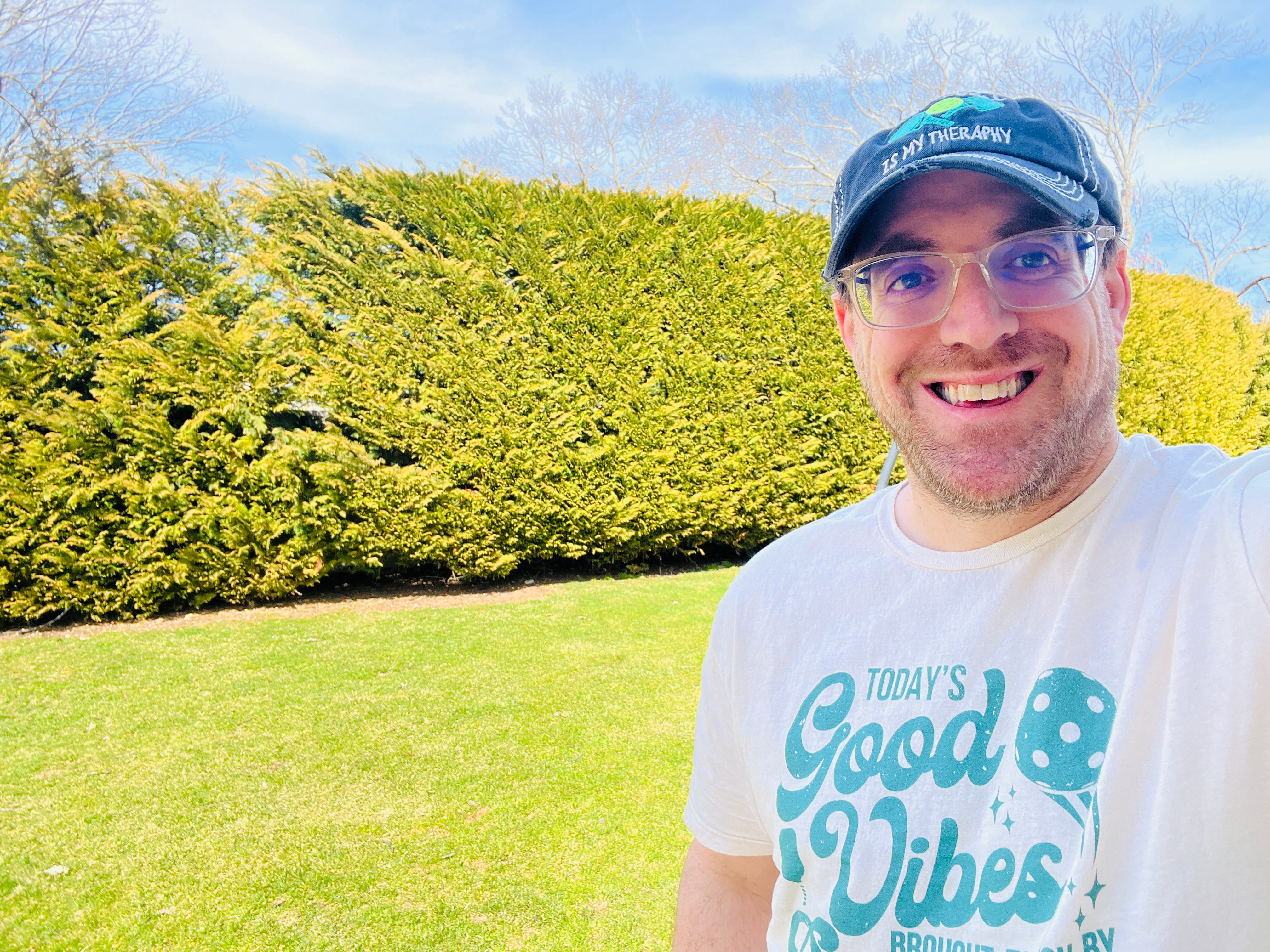
Continue Learning with Chris B. Writes
If you want to learn how to actually read, write, and feel poetry without pressure, Chris is building that in real time.
💥 Read & Write Poetry with Chris B. Writes
A clear, beginner-friendly publication designed to help you move from understanding poetry → to writing your own.
Learn how to read poetry without overthinking.
Start writing your own poems with guided prompts.
Build confidence without pressure.
If you’ve ever wanted to write but didn’t know where to start—this is where to begin.
Subscribe to Read & Write Poetry with Chris B. Writes →

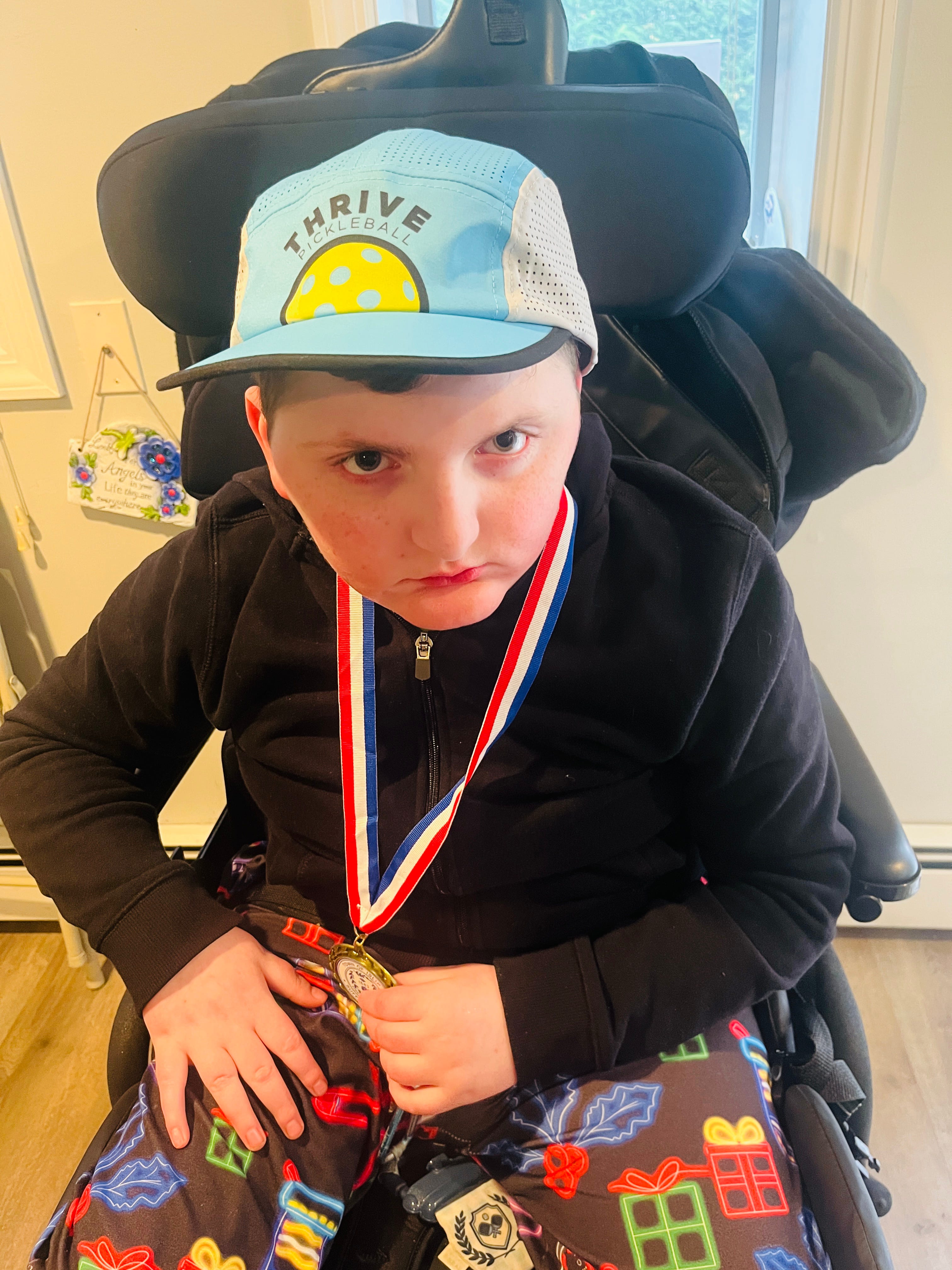
📝 Read Chris’s Original Writing
If you’re drawn to deeper, more personal writing—Chris’s original publication is where that lives.
💥 Chris B. Writes
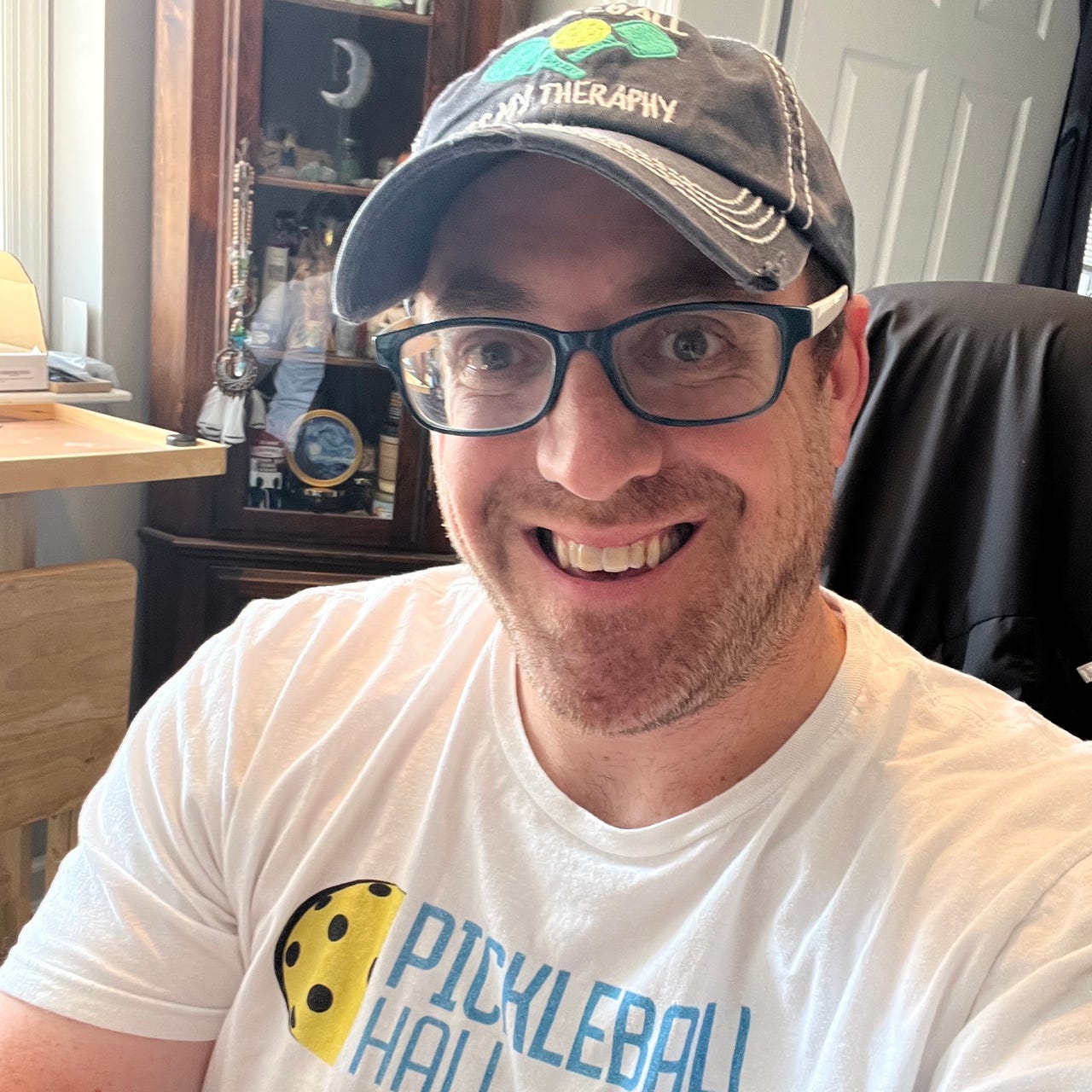
A literature publication exploring fatherhood, caregiving, his rockstar son, Brayden, nick named “Bray Bray”, music, and the lived experience behind it all.
Poems on life as a father and caregiver.
Honest reflections on Xennial life, caregiving, music, sports, being an athlete, nostalgia, and responsibility.
Writing that stays with you, makes you feel, and brings you to the present moment.
This is the writing that built the voice behind everything else.
Subscribe to Chris B. Writes →
Thank you for being here. I truly appreciate you.
— Jessica
Move first. Refine second. Publish with structure.

A MUST-READ if you go live!!
I just want to see I’ve shared this post with at least 20 people who have reached out to me about going on Substack Live. This is a tremendous resource based on Jess and I’s combined experience going live!