

I used to think investing and publishing had nothing in common.
One was about money.
The other was about words.
One lived in brokerage accounts.
The other lived in drafts and newsletters.
Then I noticed something strange.
New investors and new writers make the exact same mistakes.
They check the numbers too often.
They expect results too quickly.
They switch strategies before giving one enough time to work.
And most importantly:
They quit during the phase when compounding is happening, but remains invisible.
That’s the compounding nobody talks about.
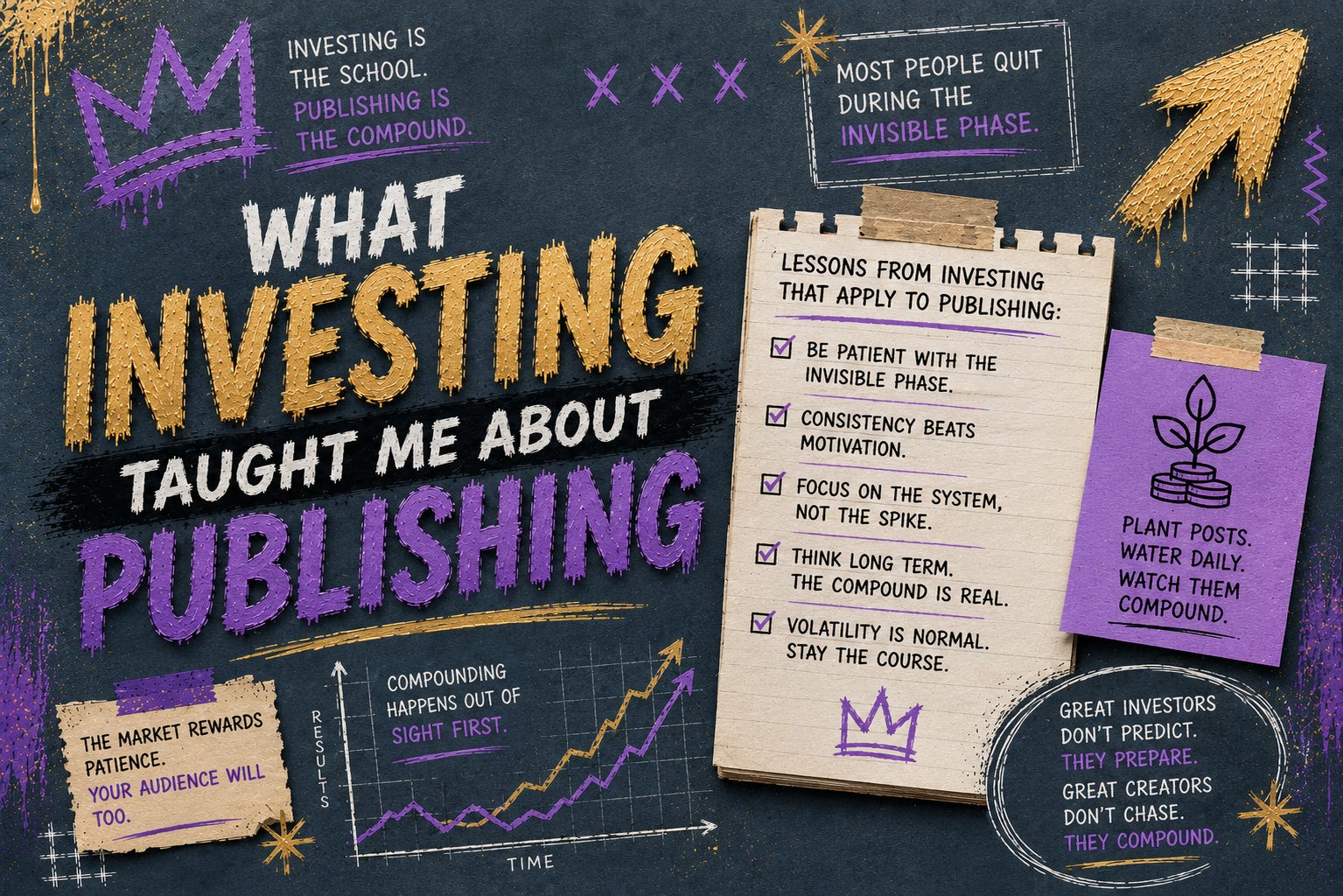
Most people understand compounding in theory.
Invest a little money consistently.
Wait long enough.
Watch it grow.
What fewer people realize is that compounding exists almost everywhere.
Skills compound.
Trust compounds.
Relationships compound.
Reputation compounds.
Writing compounds.
Publishing compounds.
The problem is that compounding is invisible at first.
And humans are terrible at believing in things they can’t yet see.
I remember publishing articles I was convinced would take off.
I was just about done with my article and I finally got it done last minute and published it.
I was thinking to myself “This is it. This is the article that’s going to make me famous!”
What happened next?
Almost nothing.
A handful of views and maybe a comment.
Maybe less than I expected.
I’d refresh the dashboard far more times than I’d like to admit.
Not because I needed the numbers, but because I wanted proof.
Proof that someone was reading.
Proof that the effort mattered.
Proof that I wasn’t talking to myself.
Around the same time, I was learning how to invest and trade stocks and I noticed something uncomfortable.
I was reacting to both the same way.
When a stock didn’t move, I questioned the strategy.
When an article didn’t perform, I questioned the publication.
When results weren’t immediate, I assumed something was wrong.
However, uncertainty isn’t evidence that the process is broken.
It’s often evidence that the process is still working.
Just not on your timeline.
Most people never experience compounding.
Not because it doesn’t work, but because they leave before it arrives.
The Four Stages of Compounding
Whether you’re building wealth or building an audience, the pattern is remarkably similar.
Stage 1: Effort Without Results
This is where most people begin.
You publish.
You invest.
You show up.
Nothing happens, or at least nothing visible happens.
This stage feels unfair because effort and results seem completely disconnected.
→ The writer wonders if anyone cares.
→ The investor wonders if anything is growing.
Both are doing the right things.
Neither receives much evidence.
This is where most people quit.
Stage 2: Effort With Tiny Results
Now there are signs of life.
A few subscribers.
A few comments.
A small increase in your portfolio.
Tiny signals that suggest something might be working.
The problem?
The results still feel too small to justify the effort.
You’re working hard for what appears to be very little return, but something important is happening.
Trust is growing.
Skills are improving.
Systems are forming.
Compounding has started.
You just can’t see much of it yet.
Stage 3: Acceleration
This is the stage everyone wants.
Growth becomes noticeable.
Subscribers arrive faster.
Opportunities appear.
The portfolio begins producing results that feel meaningful.
→ From the outside, it looks sudden.
→ From the inside, it feels earned.
Because you remember the months—or years—when nothing appeared to happen.
The acceleration wasn’t sudden.
The visibility was.
Stage 4: Apparent Luck
This is where people start saying things like:
“You’re lucky.”
“Your newsletter took off.”
“You found the right audience.”
“Your investments worked out.”
What they don’t see are the years spent showing up before anyone was paying attention.
They see the outcome.
Not the accumulation, not the compounding, and not the invisible work.
The Invisible Phase
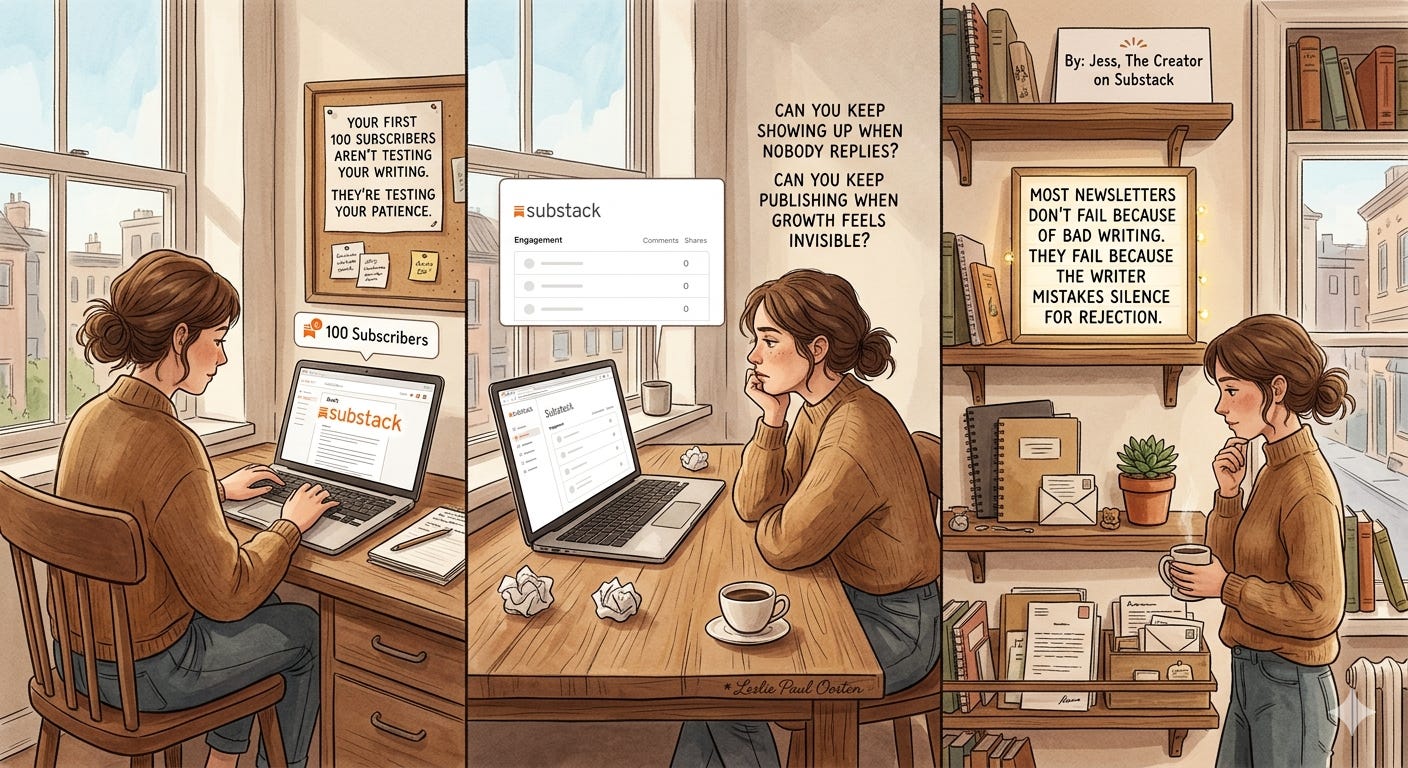
The hardest part of publishing isn’t writing.
It’s surviving the invisible phase.
The stretch of time where effort goes in and little comes back.
Where you’re asked to believe before there’s evidence.
Where you’re required to continue without certainty.
This is where psychology matters more than tactics because most people don’t quit due to a lack of information.
They quit because they misinterpret silence.
They assume silence means failure.
It doesn’t.
Silence often means you’re earlier than you think.
When I first started writing on Substack, some of my articles got slim to no likes, none.
However, I didn’t care much because I knew you had to write online consistently for 1-2 years so you can prove to yourself that you are a writer that can be taken seriously and be consistent.
So that’s what I did. I made a commitment to myself to publish once week, on Sundays and followed the plan.
I enjoyed it because I like writing and it comes natural to me, and I know an article I wrote two years ago that got no likes, still has the potential to be seen and found by others while I’m alive and when I’m gone.
Maybe it was an article that eventually found readers.
Maybe it was a publication that took months before momentum appeared.
Maybe it was a paid subscriber who arrived long after you wondered whether any of this was working.
Whatever it is, this is where the article becomes yours.
The Real Job
For a long time, I thought my job was to write better.
Now I think my job is something different.
My job is to stay in the game.
To keep publishing.
To keep learning.
To keep showing up long enough for trust to compound.
Because the hardest part isn’t writing.
The hardest part is continuing when the results haven’t arrived yet.
→ The market taught me that wealth belongs to people who can stay invested through uncertainty.
→ Publishing taught me that visibility belongs to people who can stay visible through uncertainty.
The lesson was the same.
If You’re Stuck Right Now
Patience isn’t passive.
It’s active endurance.
It’s continuing when the rewards haven’t arrived yet.
It’s believing in the process before the process rewards you.
→ The market teaches patience.
→ Publishing tests patience.
→ Compounding rewards patience.
And maybe that’s the real goal.
Not becoming a better writer and building a bigger audience.
Not chasing the next milestone, but becoming the kind of person who can keep going when the evidence isn’t there yet because most people never experience compounding.
Not because it doesn’t work, but because they leave before it arrives.
What stage of compounding are you in right now?
Thank you so much for being here. I truly appreciate you.
— Jessica
Move first. Refine second. Publish with structure.
Recent Articles👩🏻💻
3 Drivers That Create Paid Momentum For Your Substack

This article is a collaboration between Jessica Drapluk of Unstuck to Published and David Roy from ENG Sales, bringing together two perspectives on growth, momentum, and paid subscriber conversion.
The Growth Advice I'd Ignore (And The 6 Systems I'd Build Instead)

Most new Substack writers think growth comes from writing more.
I just love when experience from one space can be applied to others!
Jess, fortunately, I feel like I've made it to the Acceleration Phase--staying consistent and growing slowly but surely and seeing the compounding effect you mention.
It's a great point that there's compounding in everything and showing up with good stuff pays off in time.