

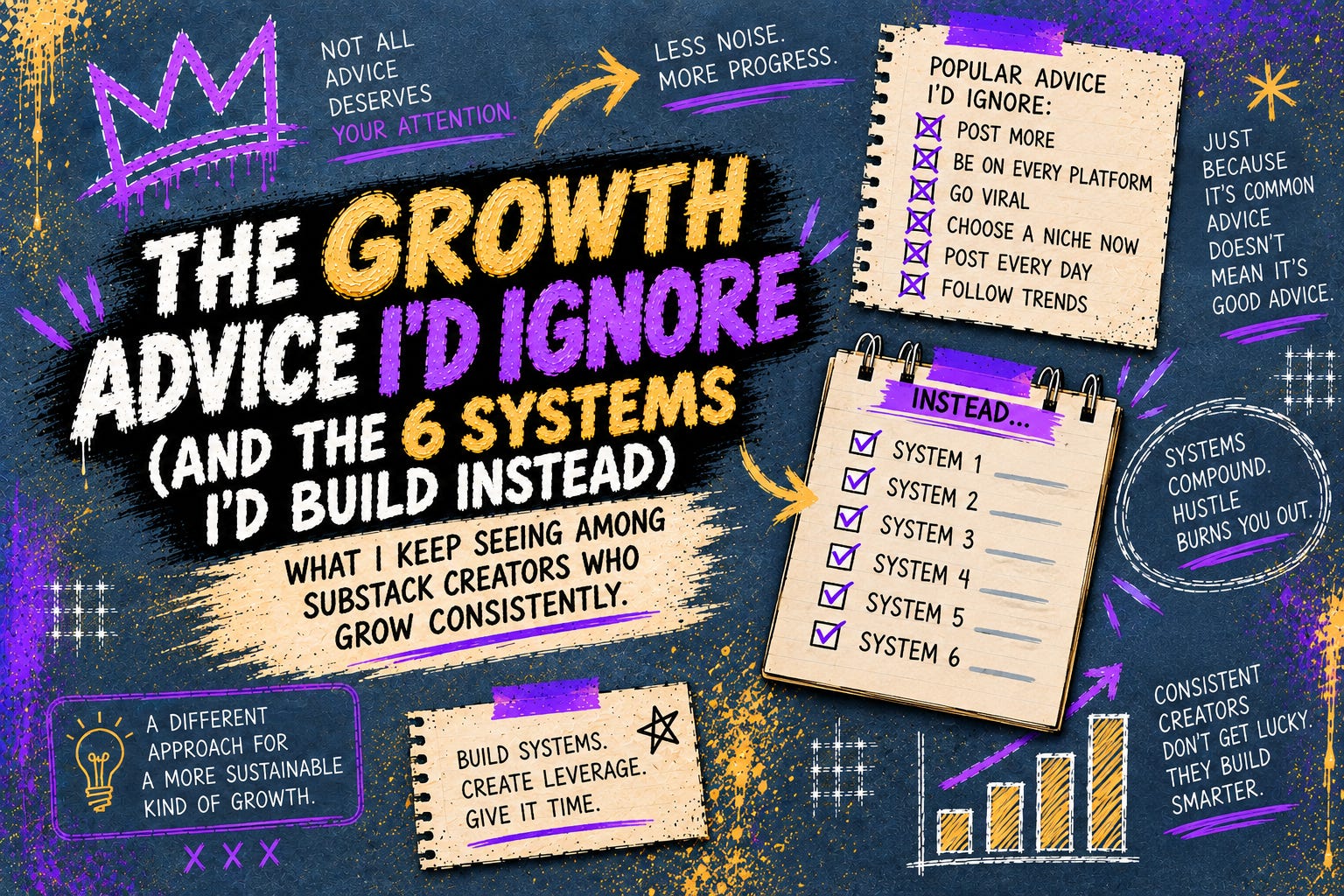
Most new Substack writers think growth comes from writing more.
More articles.
More Notes.
More strategy.
More everything.
And sure, consistency matters, but after building on Substack, studying successful publications, and listening to what best-selling creators actually do, I don’t think “write more” is the full answer.
The creators growing fastest aren’t simply publishing.
They’re building systems.
That’s the difference.
The publications that grow consistently tend to have a few things working behind the scenes:
A sustainable publishing rhythm. ←
A distribution system. ←
Collaboration opportunities. ←
Retention habits. ←
Clear paid value. ←
Consistent visibility. ←
None of these are complicated, but they are intentional.
Here are the six systems I’d build if I were starting over today.
System 1: Stop Publishing For Your Fantasy Self
Most creators don’t burn out because they lack discipline.
They burn out because they build a publishing schedule for the imaginary version of themselves who has unlimited time, perfect energy, and zero life interruptions.
That person doesn’t exist.
So they commit to publishing every day.
Or five times a week.
Or some schedule they can’t realistically maintain.
Then life happens and suddenly they disappear.
The goal isn’t maximum output.
The goal is reliability.
Readers don’t need constant content.
They need content they can trust will show up.
Many successful publications rely on repeatable formats because structure reduces friction.
Examples:
Educational guides.
Essays and reflections.
Q&A posts.
Frameworks and blueprints.
Recurring series.
When readers know what to expect, publishing becomes easier and trust becomes easier to build.
System 2: Stop Treating Notes Like An Afterthought
The creators growing fastest right now aren’t disappearing between articles.
They’re visible between articles.
That’s where Notes comes in.
Many successful writers treat Notes as a distribution system, not an extra feature.
They:
Post regularly. ←
Comment on other creators’ Notes. ←
Participate in conversations. ←
Engage with the ecosystem. ←
Notes are often where recognition starts.
A reader may see your Notes multiple times before they ever subscribe.
That’s important because subscriptions rarely happen the first time someone sees you.
They happen after familiarity starts to build.
Visibility compounds.
And Notes is one of the fastest ways to create that visibility inside Substack.
System 3: Stop Growing Alone
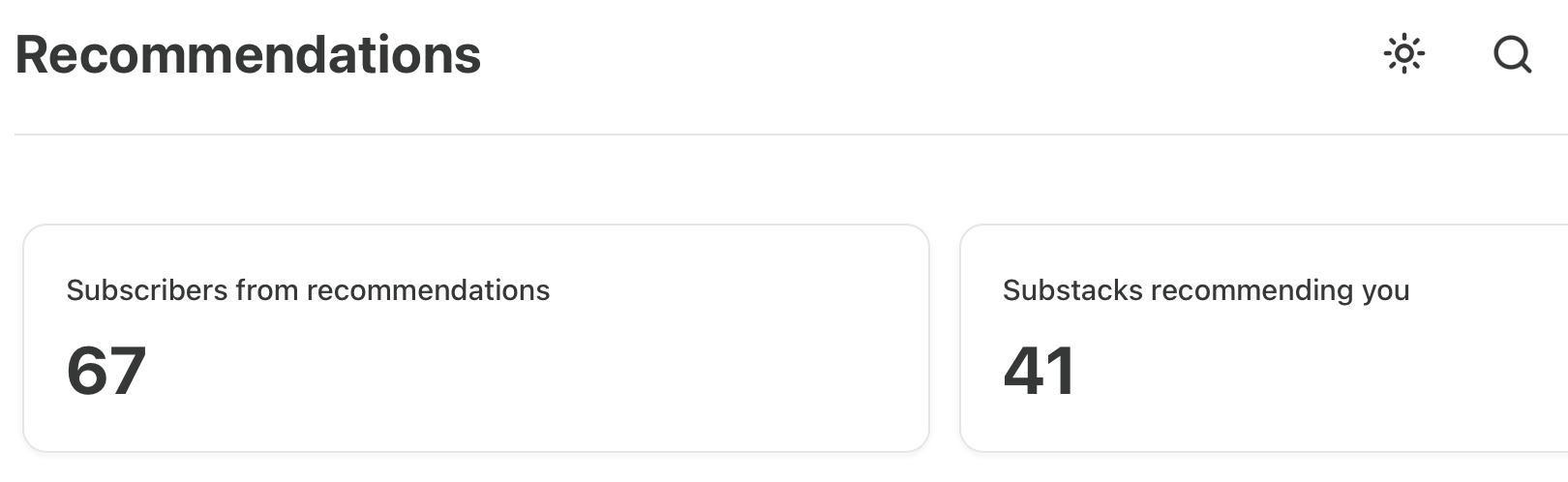
One of the fastest ways publications grow is through collaboration.
Yet many creators spend far too long trying to grow entirely on their own.
The problem is simple:
You’re asking every new reader to discover you from scratch.
Collaboration changes that.
Recommendations.
Interviews.
Recording Studio conversations.
These all create trust transfer.
If someone already trusts another creator and that creator introduces you, you’re no longer starting from zero.
You’re being introduced.
That accelerates growth far faster than most people realize.
The creators growing fastest on Substack tend to be active participants in the ecosystem.
Not isolated creators working alone in the corner.
System 4: Stop Leaking The Readers You Already Earned
Most conversations about growth focus on gaining subscribers.
Very few focus on keeping them, but retention matters.
It matters a lot because growth isn’t just about who finds you.
It’s about who stays.
Successful publications build multiple touchpoints:
Consistent publishing ←
Comments ←
Notes ←
Occasional live sessions ←
Over time, readers stop feeling like they’re subscribed to a newsletter.
They feel connected to a publication.
That’s a very different relationship.
And it’s one of the reasons some publications continue growing long after the initial excitement wears off.

System 5: Make Paid Obvious
Most paid tiers don't struggle because people hate paying.
They struggle because readers don’t understand what changes after upgrading.
If someone lands on your publication, they should immediately understand:
What they get.
Why it matters.
Why it’s worth paying for.
The strongest paid tiers have clear value.
That value might be:
Deeper frameworks
Premium essays
Resources
Workshops
Community access
Implementation support
The specifics matter less than the clarity.
When the paid tier is obvious, the decision becomes easier.
When it’s vague, people stay free.
System 6: Become Hard To Miss
Most Substack growth doesn’t come from one viral article.
It comes from becoming recognizable.
One article.
One Note.
One comment.
One recommendation.
Again and again and again.
Over time, those small actions compound.
→ Every article becomes another entry point.
→ Every collaboration introduces new readers.
→ Every interaction increases familiarity.
Eventually people stop discovering you.
They start recognizing you.
That’s where momentum begins.
Final Thoughts
After everything I’ve observed, I don’t think Substack growth is mostly a writing problem.
It’s a systems problem.
The creators growing fastest aren't always writing more.
They’re building repeatable systems that make growth easier to sustain.
That’s a very different game.
Not more chaos.
Better structure.
Inside Unstuck to Published, I share the frameworks, examples, and lessons I’ve learned while building best-selling publications on Substack.
If you’re tired of guessing what to do next, start here.
Thank you so much for being here. I truly appreciate you.
— Jessica
Move first. Refine second. Publish with structure.
Recent Articles👩🏻💻
From A Substack Comment To Croatia: The Story of Building Rare Finds

Three months ago, I answered a comment on a Substack Note.
How To Cross-Post On Substack!!

Each time I’m asked to co-author a collaborative article or I write my own collaborative with another Substack writer…I do the same thing.

Great advice Jess!
So much useful content here as always. Thanks, Jess!