

Most creators think their Substack isn’t growing because they need:
More articles and more notes.
More consistency and more time.
More engagement and more output.
So they keep writing……and writing…….and writing, but nothing changes because growth isn’t their real problem.
Clarity is.
When someone lands on your Substack, they’re asking three questions instantly:
What is this?
Is this for me?
Why should I subscribe?
If those answers aren’t clear within seconds…they leave.
The Real Problem
Most Substacks don’t struggle because the writing is bad.
They struggle because the positioning is unclear.
The name is vague or unclear.
The description is generic or broad.
The promise is missing.
So, the reader hesitates, and hesitation kills subscriptions.
The Publication Short Description on Substack Explained
Before we get into how to come up with a solid, clear Publication short description, I want to show you what I’m referring to and how you can edit and update yours.
You go to your “Dashboard” to access the “Settings” of your publication.
Once, you’re in Dashboard, scroll down on the left to Settings.
Under Settings, first will be “Basics".
Under Basics, look for “Publication short description.”
Your Publication short description is what we’re working on here.
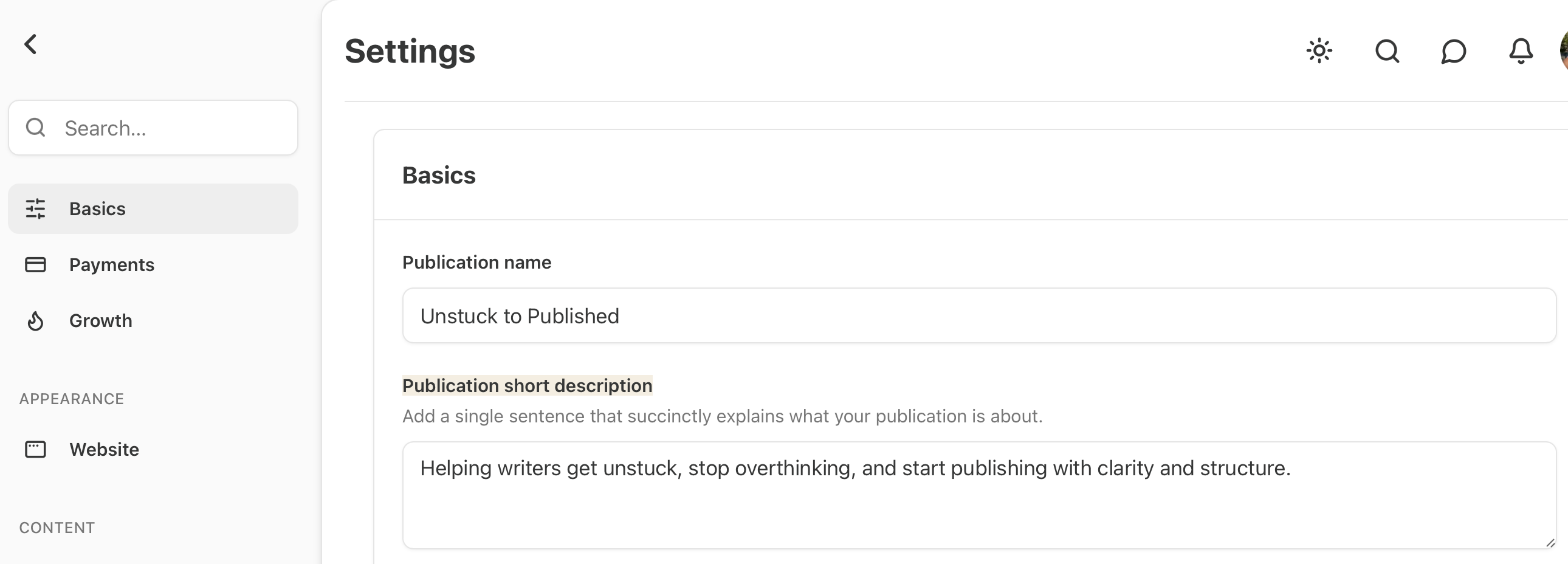
A publication short description is a single sentence that clearly explains what your publication is about.
Next, it’s important to know where your publication short description can be viewed by readers and subscribers.
Your publication website Home page.
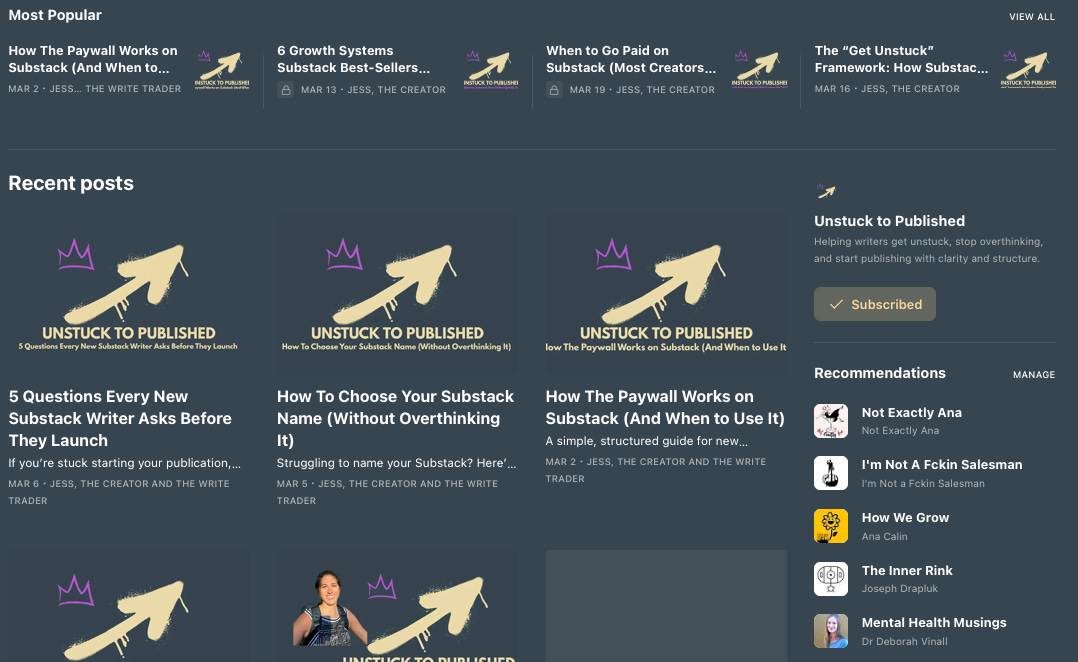
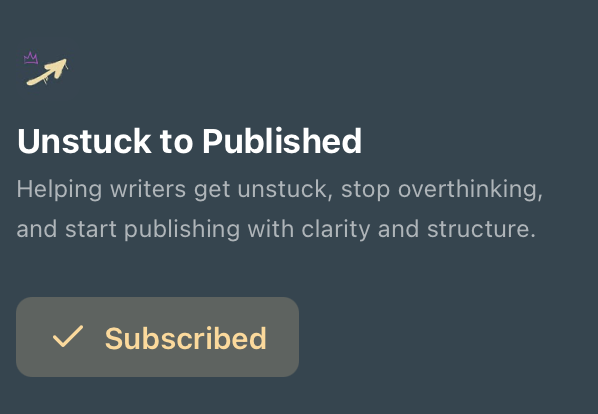
Your publication Subscribe link if posted in a Substack article.
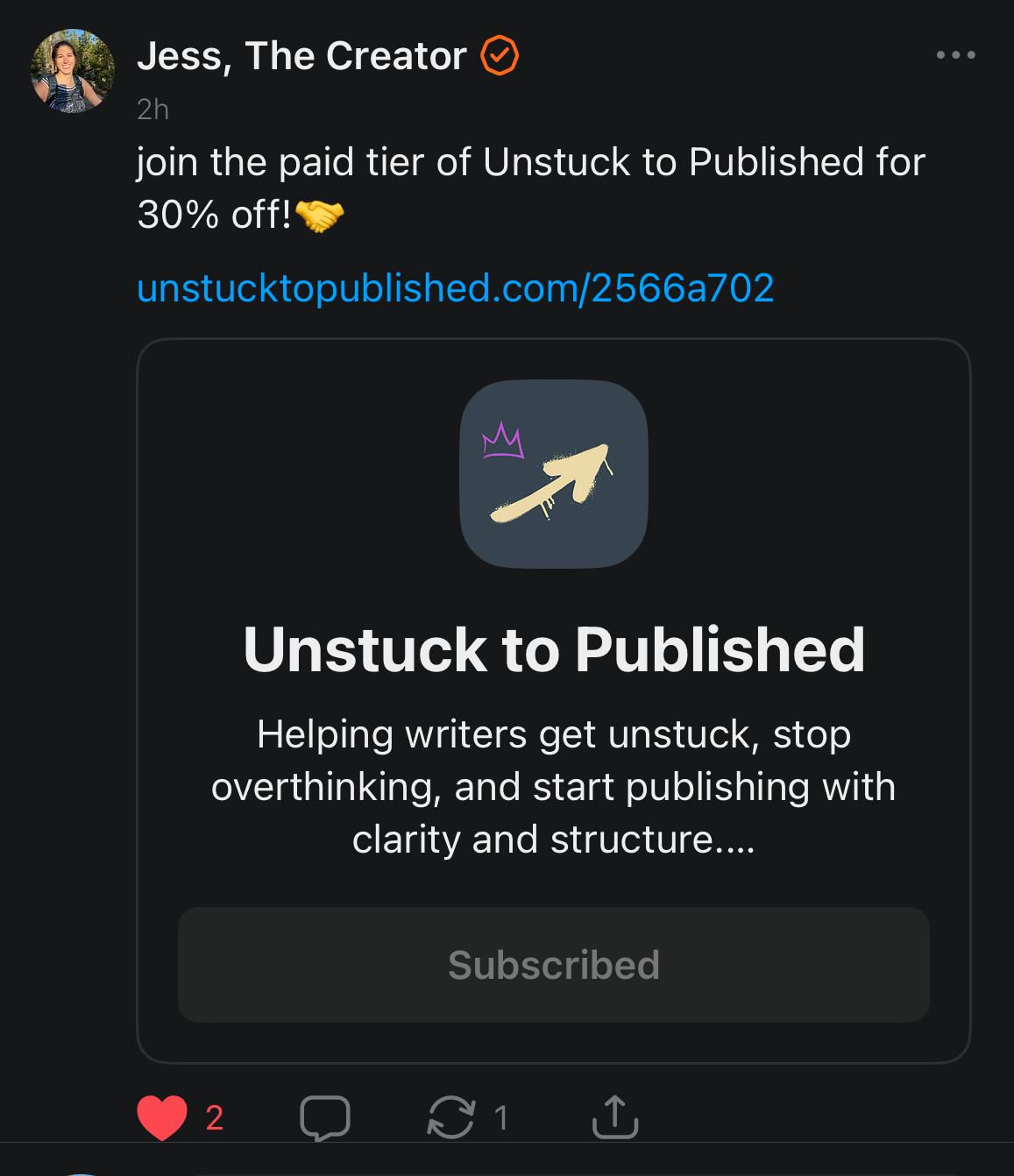
Your publication Subscribe link if shared in a Substack note.
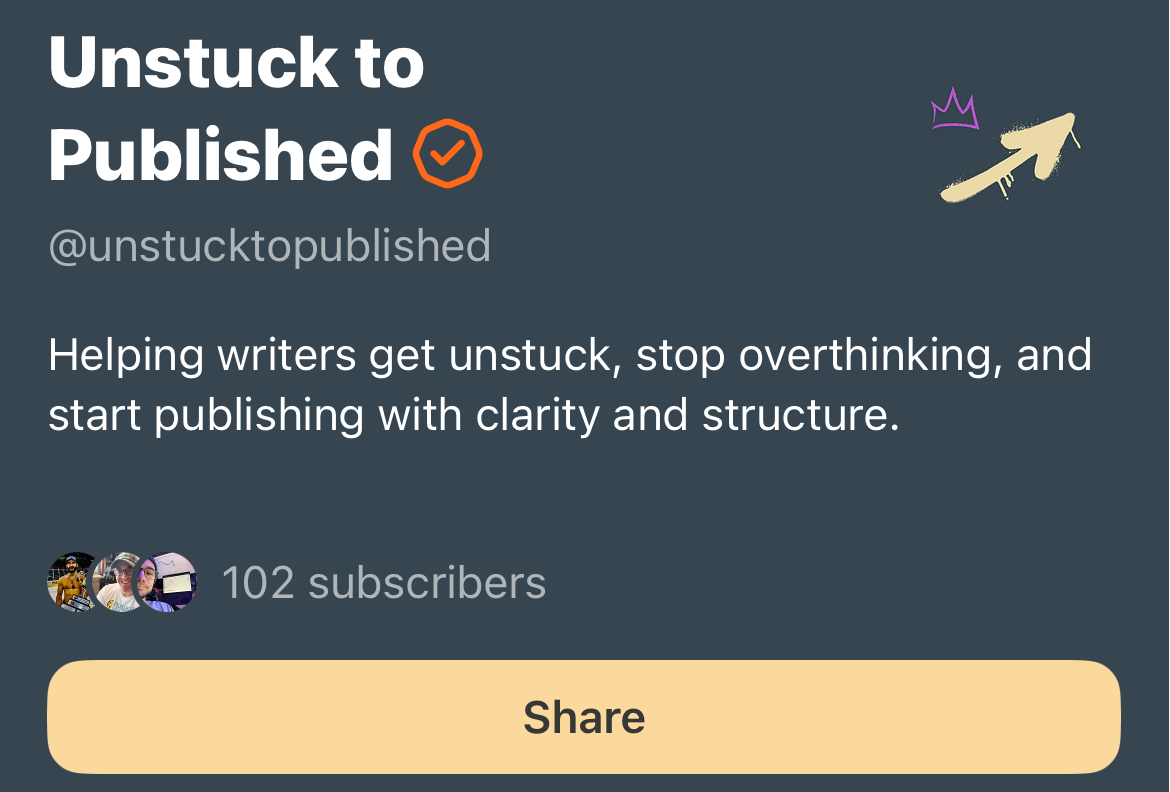
Your publication Home page in the Substack App.
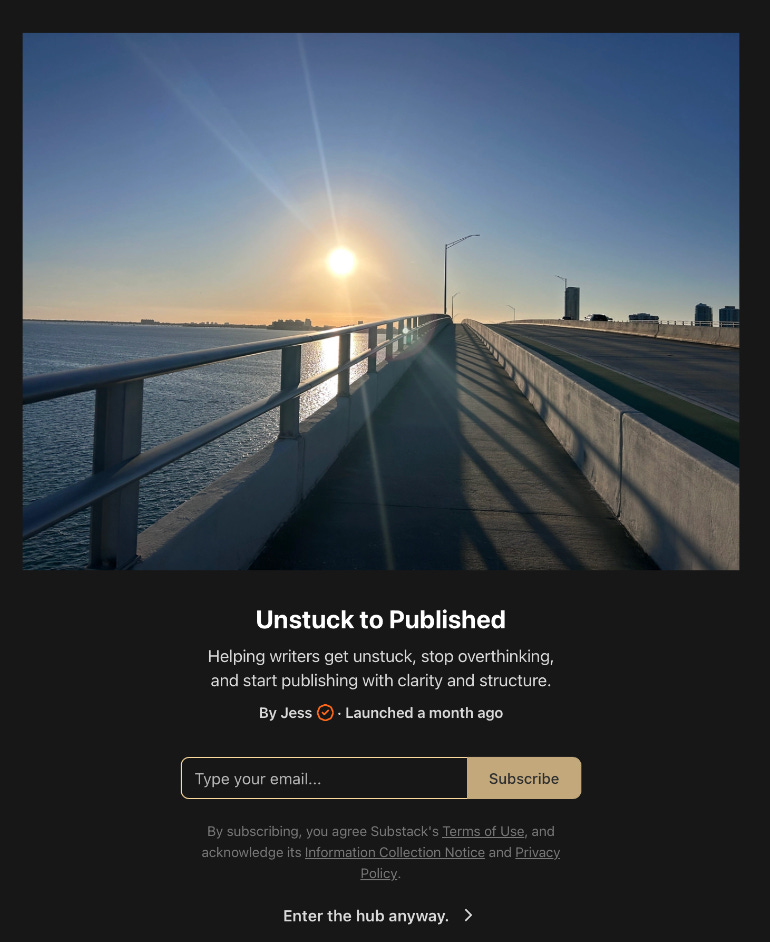
Your publication Welcome page in your internet browser on your laptop, computer, or phone.
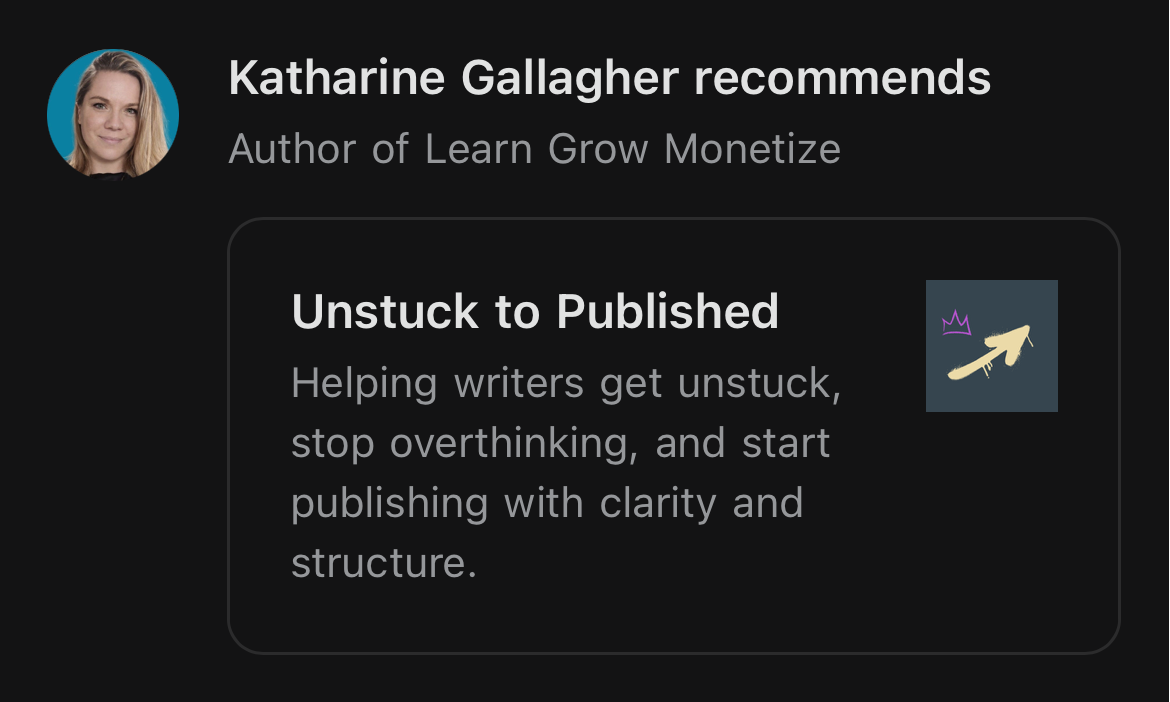
When another publication recommends your Substack publication.
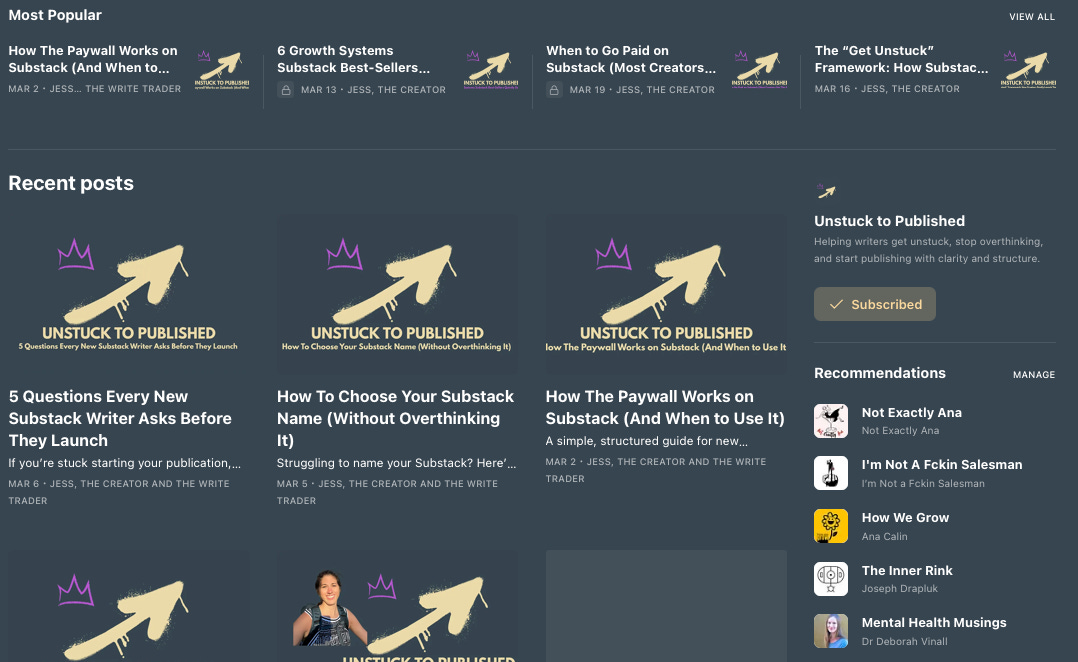
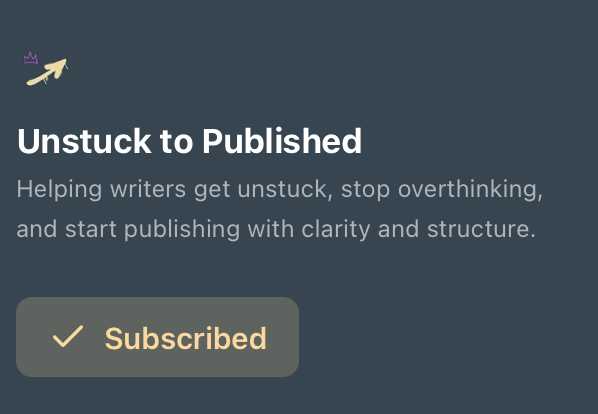
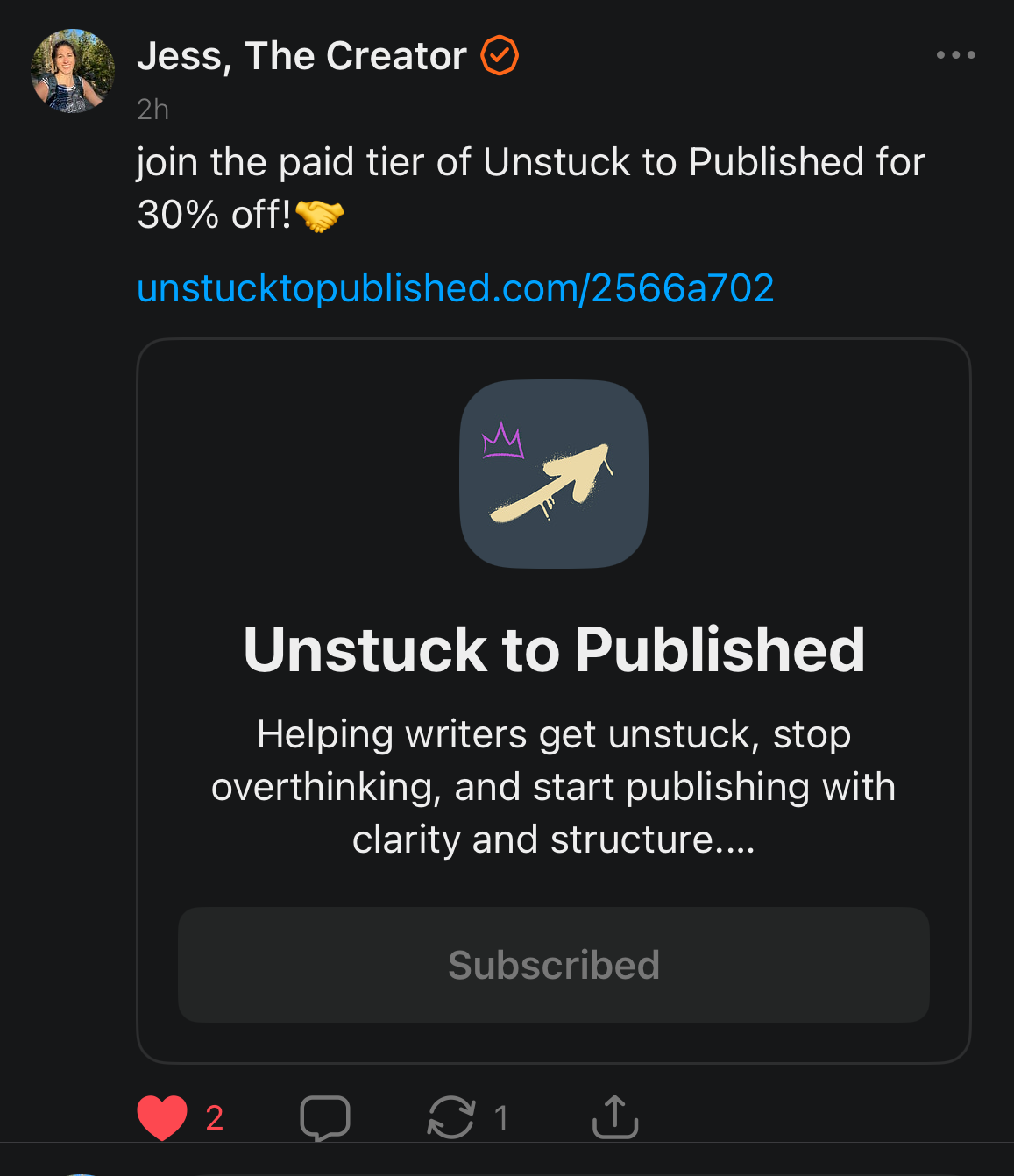
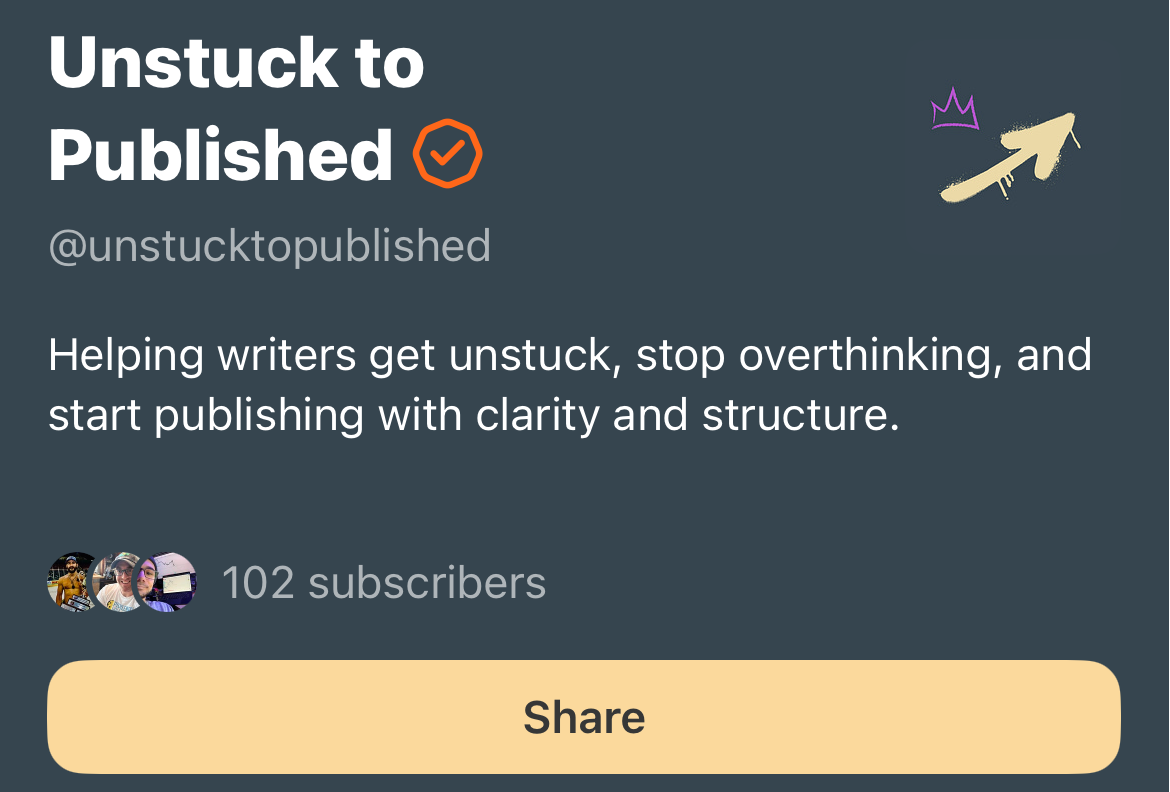
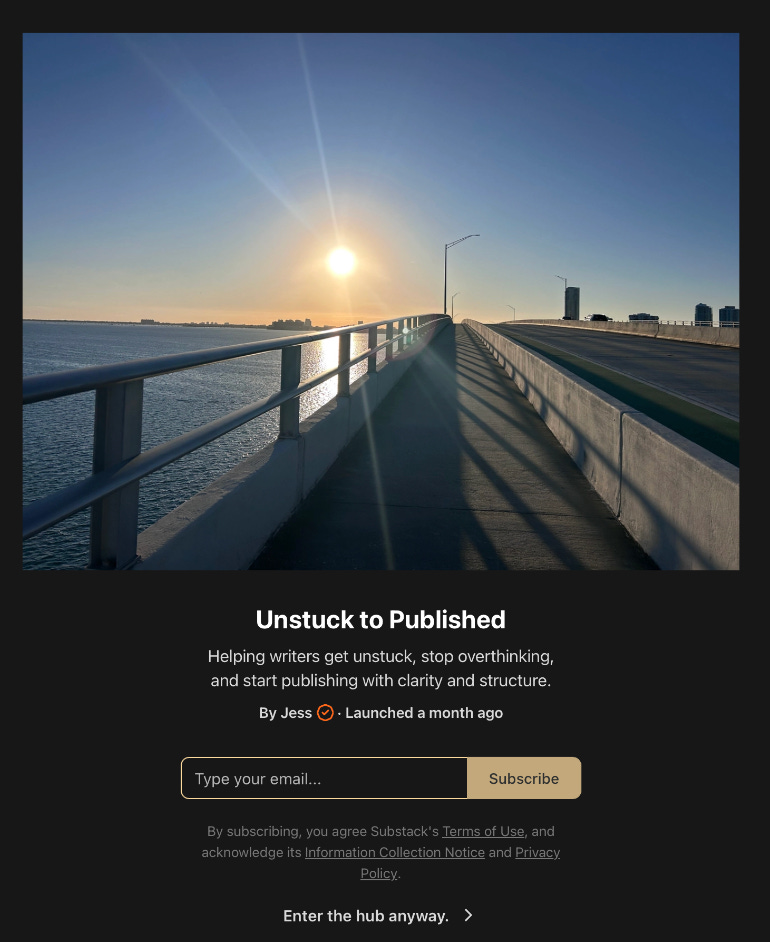
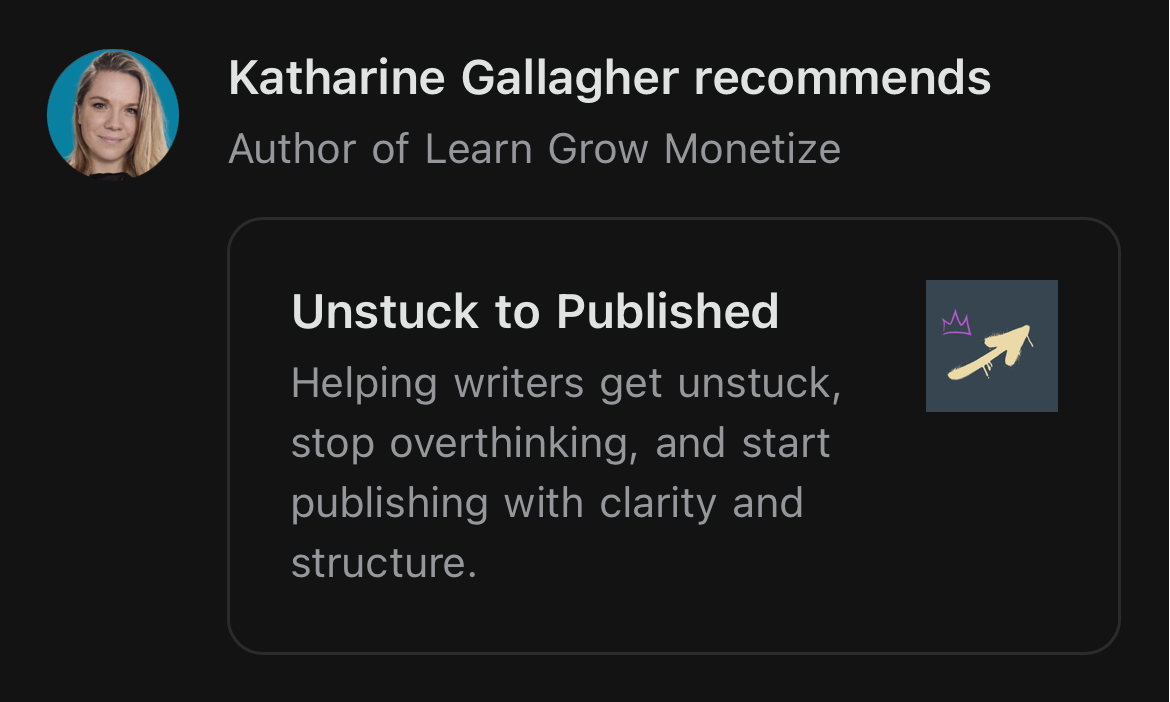
Now, that you know where to find and edit your publication short description and where it can be viewed by other readers, let’s get started on how to build on a strong, clear single sentence publication short description.
Before we move on, just notice very quickly how the publication short description examples above are all “one single sentence” that fits neatly and you can view the entire description. (They’re not too long and don’t fit or don’t show all the way).
The Fix: The 3-Line Description Clarity Framework
You don’t need a full rebrand.
You need to fix three things:
Step 1: Your Name = What is This?
Your name should answer:
What is this publication about?
Not something clever, not something abstract, but something clear.
Weak names:
“Mindful Momentum”
“Doctor Jess”
“Workout Ideas”
“Business Insights”
Strong names:
“The Bitcoin Report”
“Blue Zones Living”
If someone reads your name and has to think…It’s not clear enough. It’s that simple!
Step 2: Your Description = Who is this for?
Your publication short description should answer:
Who is this for and what does it help them do?
Who is this publication for? (Think about one single person; not a demographic)
Founders
Nurses
New moms
Entrepreneurs
Busy professionals
Futures traders
Health coaches
Poets
Creators
Millenials
Dads
Former Athletes
Caregivers
Burned out high-achievers
What does it help them do? What problem does it solve?
Show creators and entrepreneurs with a small audience how to monetize their work.
Help burnt out professionals find a way out of the rat race.
Teach traders how to navigate the futures market and day trade futures.
Help busy moms prepare and cook meals with their children without overwhelm.
Show other creators how to implement monetization systems and create multiple income streams to build wealth on their own terms.
Help new moms find their true identity and what brings them joy again.
Help Substack writers and creators get unstuck and get published with clarity and structure.
Help adults build emotional regulation skills using a training-based system.
Help creators turn “I don’t know what to sell” into a clear offer people love to buy.
Provide burned-out high achievers who know there’s a better way, but don’t have the roadmap.
Weak descriptions:
“Thoughts on writing, growth, and life.”
“I help people grow online.”
“Health tips and hacks."
Strong descriptions:
“A newsletter helping new creators go from stuck to published on Substack using a simple, structured framework.”
“The leading paid newsletter for ChatGPT & Claude prompts, and how to turn AI platforms into your own personal Digital Writing Assistant.”
“This newsletter shows you how to convert free readers to paid, if you've been posting every week and have had no success.”
Specific wins. Every time.
Step 3: Your Promise = Why should the reader stay? Why should the reader trust you?
This is the part most people skip.
Your promise is the outcome.
Not:
“I share insights.”
“I provide templates.”
“I give toolkits.”
But:
“I help you go from ___ → ___.”
“I show you how to go from ___ → ___.”
“I give you the blueprint from ___ → ___.”
“I got my first paid subscriber in three days with a small audience and I show you exactly how.”
“I built over ten Substack publications and four have achieved Best-Seller status. I show you how to get the foundations right from day one.”
People don’t subscribe for content. They subscribe for change.
The 10-Minute Clarity Audit
If your Substack isn’t growing, answer these key questions:
Who is this for? / Think about one person.
What does it help them do? / What problem does it solve?
Why should they subscribe? / What do they get?
If you can’t answer those in 5 seconds…Your reader can’t either.
Before → After: The Real Identity Shift
Before:
“I write about mindset, business, and ideas.”
After:
“I help creators and writers publish their Substack from scratch and build a solid publication foundation the right way from day one.”
“I provide burned-out high achievers who know there’s a better way, but don’t have the roadmap.”
“I help astute futures market participants who trade MES or MNQ and want structure and clarity, not chaos.”
“I show busy professionals how to navigate the stock market with a calm, systematic framework.”
“I teach adults who were never taught emotional regulation skills how build them and develop emotional steadiness, self-trust, and emotional freedom.”
Same person. Different clarity. Different results.
You help one specific person with one specific problem with one specific solution.
The Truth
You don’t need:
A new strategy.
A better niche.
More content.
You need:
Clear Positioning🤝
Why? Because when your Substack is clear:
The right people recognize it.
The right people find it.
Your writing becomes easier.
Your growth becomes natural.
Your success becomes sustainable.
If You’re Stuck Right Now
Most creators try to grow before they’re clear.
The ones who win?
They get clear first.
If you fix this, everything else becomes easier.
Thank you for being here. I truly appreciate you.
— Jessica
Move first. Refine second. Publish with structure.
👩🏻💻If You Want to Implement This The Right Way
I created this for you:
A Beginner’s Blueprint To Go From Stuck → Published (The Right Way): Build Your Substack the Right Way From Day One:
Inside, I break down:
The exact “Get Unstuck” framework.
How to position your publication correctly.
A clear first article structure.
A simple paywall strategy.
A no-fluff checklist.
You don’t need more content. You need a clear foundation.
If you want a clean, simple path forward, you can check it out here:
Recent Articles👩🏻💻
I Got My First Paid Subscriber in 3 Days (Here’s What I Did Differently)

On a Monday, I enabled paid subscriptions on my Substack.
No One Reads Your Substack at First (And That’s Exactly How It’s Supposed to Work)

The first time you publish a Substack article, something almost always happens.
I appreciate this post, because I see many writers on Substack, especially new accounts, who have not gone through this process. And I do agree it really does make a difference for attracting your readers and growing your subscriber base.
I have a question for you, how would you recommend a Substack writer address this topic when they write fiction, or they are an illustrator, or simply writing their autobiography or short stories or poems? How can they share how they help people through their writings?
This post helped me alot ☺️✨
Thank you Jess for sharing this detailed information on importace of right substack description.