


Chris B. Writes has published every Monday for more than 52 weeks.
I’ve been publishing every Sunday for roughly three years.
When we reunited on his show, Typing It Real, we talked about our publishing routines, the friendship we’ve built over the past year, and what we’ve learned about growing on Substack.
Naturally, the question of growth secrets came up.
I wish I could tell you we’d discovered a hidden button in the dashboard that makes subscribers appear.
Believe me, if I found that button, I’d have a tutorial ready by Sunday. 😂
But Chris and I haven’t followed some identical, carefully engineered growth plan.
We write about different subjects. We run our publications differently. We have different responsibilities and different ways of creating content.
What we do have in common is that we’ve kept publishing, even when the numbers weren’t particularly exciting.
We’ve also helped each other launch projects, learned new tools, and developed a friendship that started long before we had any idea what we’d end up creating together.
Looking back, I don’t think one tactic explains our experiences.
It’s the decisions we made along the way.
Some were small enough that we barely noticed them at the time.
Others changed what we thought we were capable of doing and none required us to copy somebody else’s entire publishing routine.
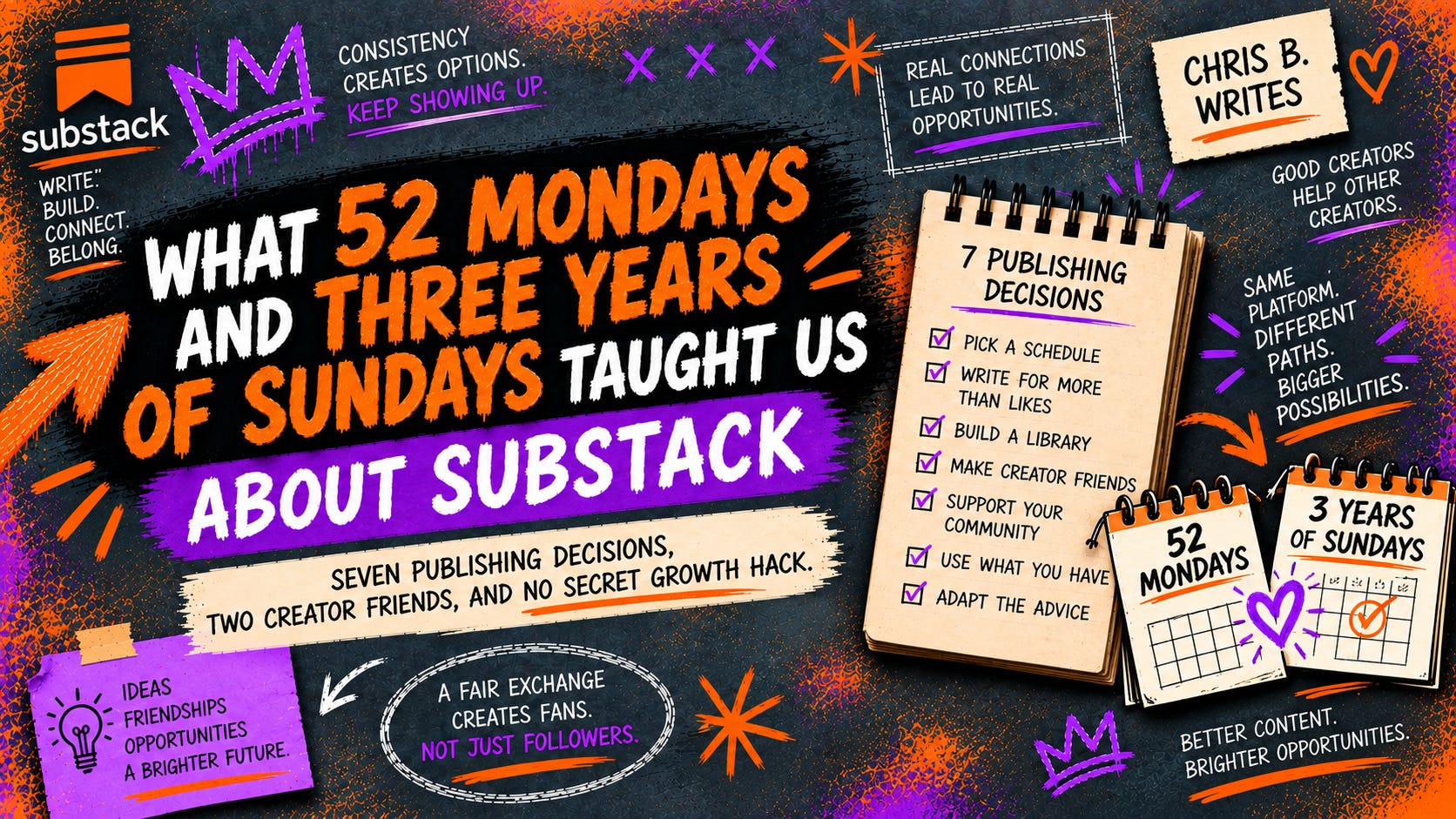
7 Publishing Decisions That Shaped Our Substack Experience
Looking back, our progress didn’t come from discovering one big secret.
It came from decisions we kept making, one Monday and one Sunday at a time.
1. Choose a publishing schedule you can maintain.
Chris publishes every Monday and I’ve been publishing every Sunday since 2023.
Neither of us chose those days because we believed Substack would reward us for publishing at a particular time.
We chose a schedule and kept returning to it.
When I first started writing online, I came across advice about publishing weekly for two years before expecting to take yourself seriously as a writer.
I decided to give it a try.
At the time, I wasn’t thinking about running three publications, hosting Lives, or launching a podcast.
I wanted to write. So I wrote.
Some of my early articles got zero likes.
ZERO.
Substack didn’t even have Notes when I started. I was promoting articles by posting screenshots to my Instagram Stories and adding a link.
That was pretty much the whole operation, but I kept publishing on Sundays.
Chris made a similar commitment to his Mondays. He kept showing up until he’d passed the one-year mark.
Neither of us waited for consistent engagement before becoming consistent writers.
Now, before you decide this means you need to publish every Sunday for three years, let me stop you.
You don’t.
The decision isn’t publish weekly no matter what.
It’s choose a schedule you can realistically keep.
If that’s every Sunday, fine.
If it’s every other Wednesday, also fine.
If you have the time and genuinely enjoy publishing twice a week, go ahead, but don’t commit to five articles a week because another creator told you that’s what it takes to grow.
You don’t know what their calendar looks like behind the scenes.
You don’t know how quickly they write, what other responsibilities they have, or how long they’ve been building their workflow and you certainly don’t need to make writing miserable just to imitate somebody else’s output.
A schedule that looks impressive for two weeks and then collapses isn’t doing you much good.
→ Choose a rhythm you can return to during an ordinary week, when there’s no exciting milestone to celebrate and no sudden burst of inspiration because most of your publishing life will be made up of ordinary weeks.
Your decision: Pick a publishing schedule that fits your actual life, then give yourself enough time to see what happens when you stick with it.
2. Give yourself a reason to write before the likes arrive.
During our Live, Chris and I talked about what keeps us writing.
My advice was to make sure you get something out of the article itself.
Maybe you researched a topic you’ve wanted to understand.
Maybe writing helped you work through an experience.
Maybe you finally explained something that’s been bouncing around in your head for months.
Or maybe you created a resource you can use again.
Whatever it is, find a reason to feel satisfied when you hit Publish because if the entire value of your article depends on how many people like it, you’re handing your dashboard an awful lot of power over your day.
Imagine this.
You finish an article you’re proud of, you publish it, and you check the numbers a few hours later.
Three likes.
Suddenly, you’re questioning whether the article was any good.
But what changed?
The article didn’t.
You just found out how many people had clicked a button so far.
That number can tell you something about how your work is being received. It can’t tell you everything about what the work was worth.
Here’s an example from my own publication.
I wanted to write a tutorial explaining how to start a podcast on Substack.
Whenever I create a how-to article, I like to walk through the actual process so I can show readers what to do.
So I created a podcast for Unstuck to Published while documenting the steps.
I finished the tutorial. Then I realized I’d accidentally given myself a podcast. 😂
Even if nobody had liked that article, I would’ve walked away with something useful.
I’d learned the process, I’d created a podcast, and I’d written instructions I could refer to again.
Then Chris read the tutorial.
He followed it to turn Typing It Real into a podcast, connected it to podcast platforms, and brought his existing videos into the feed.
He told me the setup took him about an hour.
→ One article gave me a podcast and helped a friend launch his.
That’s a result I can point to without opening my analytics.
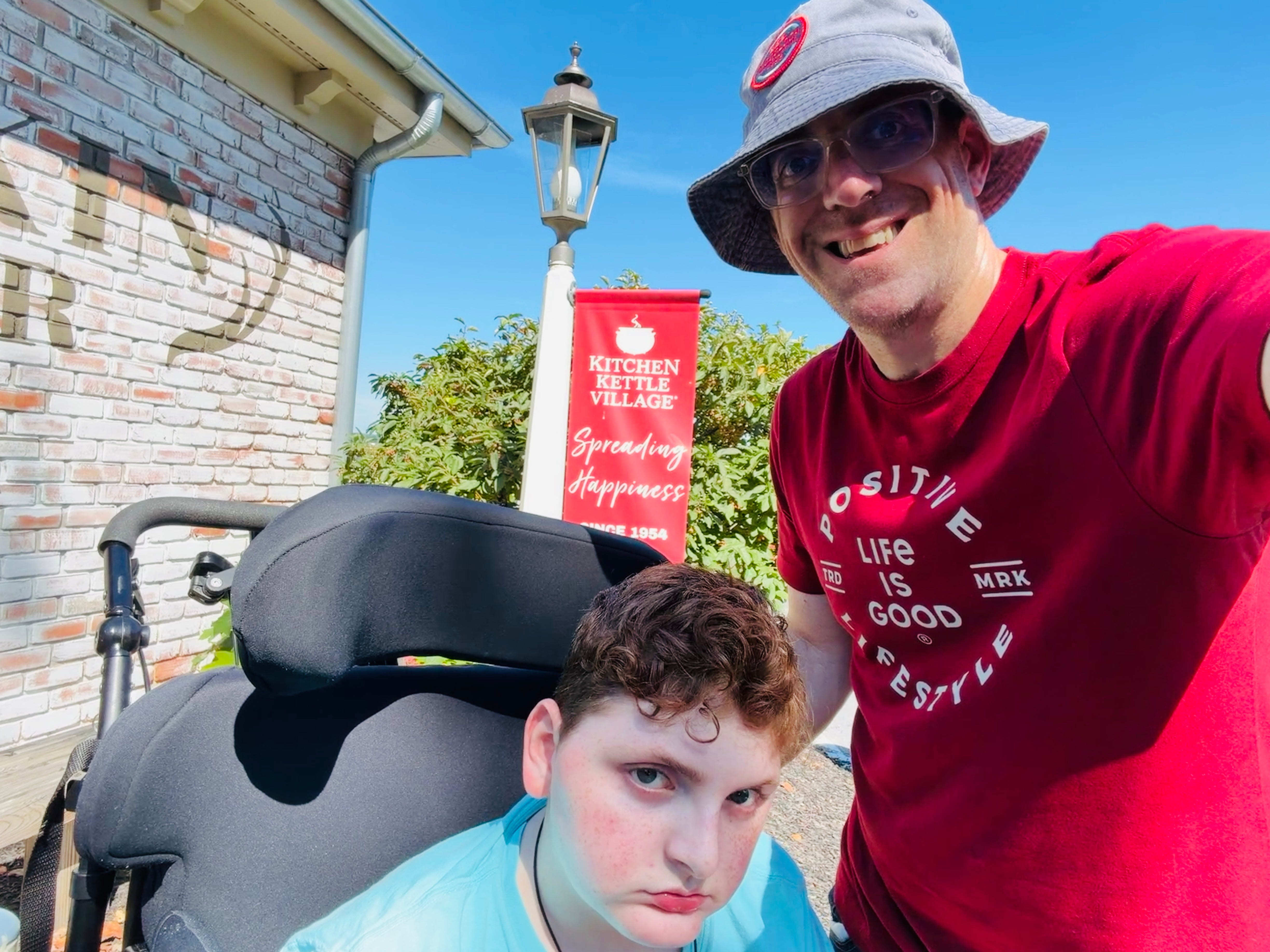
Chris has his own reasons for writing, too. His poetry and personal stories include reflections on caregiving and his life with his son, Brayden a.k.a Bray Bray.
Those stories matter to him before anyone responds to them.
And I think that’s an important thing for creators to remember.
You can want subscribers and engagement.
You can want your publication to become a business, but if every article needs an immediate reward to justify the time you spent writing it, the process is going to get exhausting.
Your decision: Before you publish, ask yourself, What did I get out of making this? Give yourself an answer that doesn’t require checking your stats.
3. Build a library of work worth returning to.
This is where consistency becomes useful in a different way.
Publishing regularly gives you the opportunity to build a collection of work.
Not a pile of posts you publish and immediately forget.
→ A library.
Think about what happens when someone discovers your publication for the first time.
Maybe they find you through a Note.
Maybe another writer recommends your work.
Maybe they watch a Live and click through to your publication.
They read one article and want to know more.
What can they find?
If you’ve been publishing for a while, you may already have an article that answers their next question.
You may have a tutorial they can follow or you may have an older piece that explains why you started writing about this subject in the first place.
That’s one reason I don’t think creators should judge every article as though it’s a separate event with a 24-hour expiration date.
A post can still be useful long after its original publication date.
My podcast tutorial is a good example.
I wrote it to explain a process.
Chris found it and used it.
→ Now, whenever someone asks me how to start a podcast on Substack, I have a resource I can send them.
I don’t need to explain every step from scratch and if the platform changes, I can revisit the tutorial and update it.
That’s a different way of thinking about your publication.
Instead of asking only, How many people read this article today?
You can also ask:
Will this be useful to someone who discovers it six months from now?
Not every article needs to be evergreen, of course.
Some stories belong to a particular moment, but when you’re writing a tutorial, explaining a recurring problem, or sharing a lesson you’ve learned, think about how that article fits into the larger body of work you’re creating.
Give it a clear headline.
Make it easy to understand.
Link to it when a new article touches on the same subject.
Bring it back when someone asks a question it already answers.
Your older work doesn’t have to disappear just because you’ve published something new.
And here’s the distinction I want to make:
Publishing consistently doesn’t guarantee growth.
→ It gives you more opportunities to create work that readers can discover and return to.
That’s a reason to keep writing.
A much better reason than believing your 52nd article will somehow unlock a secret level of Substack.
Your decision: Treat your publication as a growing library. Create useful work, connect related articles, and give older posts another chance to help someone.
4. Invest in creator friendships without keeping score.
Chris hosted my very first Substack Live.
I didn’t want to go Live.
I’d been writing online for years, and one of the things I liked about Substack was being able to publish without getting on camera.
Then Substack introduced Lives.
Chris invited me and I said yes.
Fast-forward a year, and I was back on Typing It Real after somehow scheduling FOUR Lives in one week.
I also host a weekly Live show, Unstuck to Finding Your Edge, with Robyn Levin.
Apparently, I’ve changed my mind about Lives, but Chris and I didn’t become friends because he had a collaboration opportunity for me.
He’d started reading my health & wellness publication, NP Fellow Become the CEO of Your Health.
As a nurse, I understood some of what he was experiencing as a caregiver to his son.
We started talking and we kept talking.
Over the past year, we’ve shared ideas, encouraged each other, celebrated milestones, and helped each other with projects.
One day, Chris texted me about starting a second publication.
He wanted a separate home for his poetry tips and resources.
We worked together to set up Read & Write Poetry with Chris B. Writes.
Within about 48 hours, he had the publication ready.
Then he went back to his original publication and updated his About page, welcome email, and offerings using what he’d learned.
He sent me the results. I told him they were pristine.
Apparently, that’s my highest form of approval and Chris has helped me too.
We bounce ideas off each other, we encourage each other when we’re working on something new, and we celebrate when the other person reaches a milestone.
That friendship has led to projects neither of us had planned when we first connected, but here’s the part I don’t want you to miss.
We didn’t become friends because we’d calculated what we could get out of each other.
We connected over something personal. The publishing projects came later.
→ There’s a difference between having a friend you can collaborate with and treating every creator you meet like an unpaid business development opportunity.
You don’t need to turn every conversation into a pitch and you also don’t have to pretend you can’t help someone you genuinely like.
If a friend is working on something you’ve already figured out, share what you know.
If they write an article your readers would appreciate, share it.
If you have an idea that would be fun to create together, ask them.
And if nothing comes of it beyond a friendship?
That’s allowed, too.
Your decision: Make room for creator relationships that don’t need to produce a measurable return. Help when you can, collaborate when it makes sense, and stop keeping score.
5. Help your readers connect with each other.
Chris and I both care about supporting other creators.
→ One of the ways Chris does that is through regular prompts in his Community Chat.
On Tuesdays, for example, he encourages members to share someone else’s work alongside their own.
Other days have different themes that give people reasons to participate.
It’s a simple idea.
Give people something to talk about.
Make room for them to share their work.
Encourage them to discover each other.
During our Live, Chris told a story about two people who met through his Community Chat.
One lived in Minneapolis and the other lived in Portugal.
When the first person visited Lisbon, they met for coffee.
An actual coffee. In the same room with chairs and everything. 😂
Think about that for a second.
Two people who might never have met found each other through a writer’s online community.
Then they took that connection into the real world.
Chris didn’t have to orchestrate the friendship.
→ He gave people a place to meet.
They did the rest and that raises a useful question for anyone who runs a publication.
→ Does your community give readers a reason to connect with anyone besides you?
It’s easy to build every interaction around your latest article.
You publish. Readers comment.
You reply and that’s the end of the conversation.
There’s nothing wrong with that, but you can create opportunities for more.
Ask readers what they’re working on.
Invite them to share a resource.
Encourage them to recommend another writer.
Start a conversation that doesn’t require everyone to talk directly to you.
You don’t need a daily Community Chat to do this.
→ A thoughtful question at the end of an article can be enough to get people talking.
And if you do run a chat, consider whether every prompt needs to revolve around your own work.
Your readers have experiences, ideas, and projects of their own.
→ Give them room to bring those things into the conversation.
You might be surprised by what happens.
Coffee in Lisbon, apparently. 😂
Your decision: Create opportunities for your readers to discover and support each other, whether that’s in your comments, your Community Chat, or through the work you choose to share.
6. Make better use of the content you’ve already created.
Chris and I also talked about turning Substack Lives into podcast episodes and this part of our conversation reminded me how often creators overlook the work they’ve already made.
Let’s say you host a Live.
You finish recording.
Substack creates a replay draft.
You could publish it immediately and move on.
Or you could spend a little time making that replay easier for someone to discover and enjoy later.
Give it a headline that explains what the conversation is about.
Add a thumbnail.
Write a useful description.
Include links to the resources you mentioned.
Make sure viewers can find your guest’s publication.
If you’ve connected your Lives to a podcast, check what will appear in the episode notes.
I write longer companion articles for many of my Lives.
They’re designed to stand on their own, so someone can read the article even if they don’t have time to watch the conversation, but I don’t want an entire article copied into a Spotify episode description.
So I edit the podcast description separately and include links back to the article and my guest’s work.
Chris takes a shorter approach with his Live posts. He includes a synopsis, discussion points, shout-outs, and links.
Different formats. Same underlying decision.
We’re thinking about what happens to the content after the original conversation ends.
A Live can become a podcast episode.
A conversation can inspire an evergreen article like this one.
An article can give you several specific ideas for Notes.
A tutorial can become a resource you share whenever someone asks the same question.
And an older post can become relevant again when you publish something related.
You don’t need to create something entirely new every time you want to reach someone.
Sometimes you’ve already done the hardest part.
The material is sitting in your drafts, waiting for you to give it a proper headline and a reason to exist beyond the day you recorded it.
This is also why I encourage creators to learn what Substack’s existing tools can do before adding another piece of software to their workflow.
I built my podcast while writing a tutorial. Chris followed that tutorial and built his.
Neither of us needed to make podcasting more complicated than it had to be.
🫶 Read my tutorial on starting a podcast on Substack:

Your decision: Before starting another content project, look at what you’ve already created. Can you make it easier to find, give it a new format, or use it to answer a question your readers keep asking?
7. Adapt other creators’ advice to your own life.
Chris and I have plenty in common.
We both enjoy writing and we both have regular publishing schedules.
We both like collaborating and helping other creators, but we don’t run identical publications.
Chris writes poetry, personal stories, and reflections on caregiving.
I publish across three different subjects, create tutorials, and host regular Lives.
→ His Monday schedule works for him.
→ My Sunday schedule works for me.
Neither schedule is a universal instruction manual and this is where I think creators can get themselves into trouble.
They see someone else’s results and try to copy every visible part of the process.
The number of articles, the publishing time, the number of Notes, the number of Lives, the number of publications, but they’re copying a routine without knowing what that person had to build around it.
You might learn something useful from a creator who publishes five articles a week.
That doesn’t mean you need to publish five articles a week.
You might love the way Chris runs his Community Chat.
That doesn’t mean you need to recreate his entire calendar of prompts.
You might read my podcast tutorial and realize a podcast would be a useful addition to your publication or you might read it and decide you don’t want to start one.
Both are reasonable outcomes.
The point of learning from another creator isn’t to become an exact copy of them.
→ It’s to understand what they’re doing, decide whether it solves a problem you actually have, and figure out how to make it work in your own circumstances.
Take the idea, test it, keep what works, and leave the rest.
And if your circumstances change, change your routine.
You own your publication.
→ You’re allowed to make decisions about how it fits into your life.
Your decision: Learn from other creators without adopting every part of their workflow. Build a publishing routine around the work you want to do and the life you actually have.
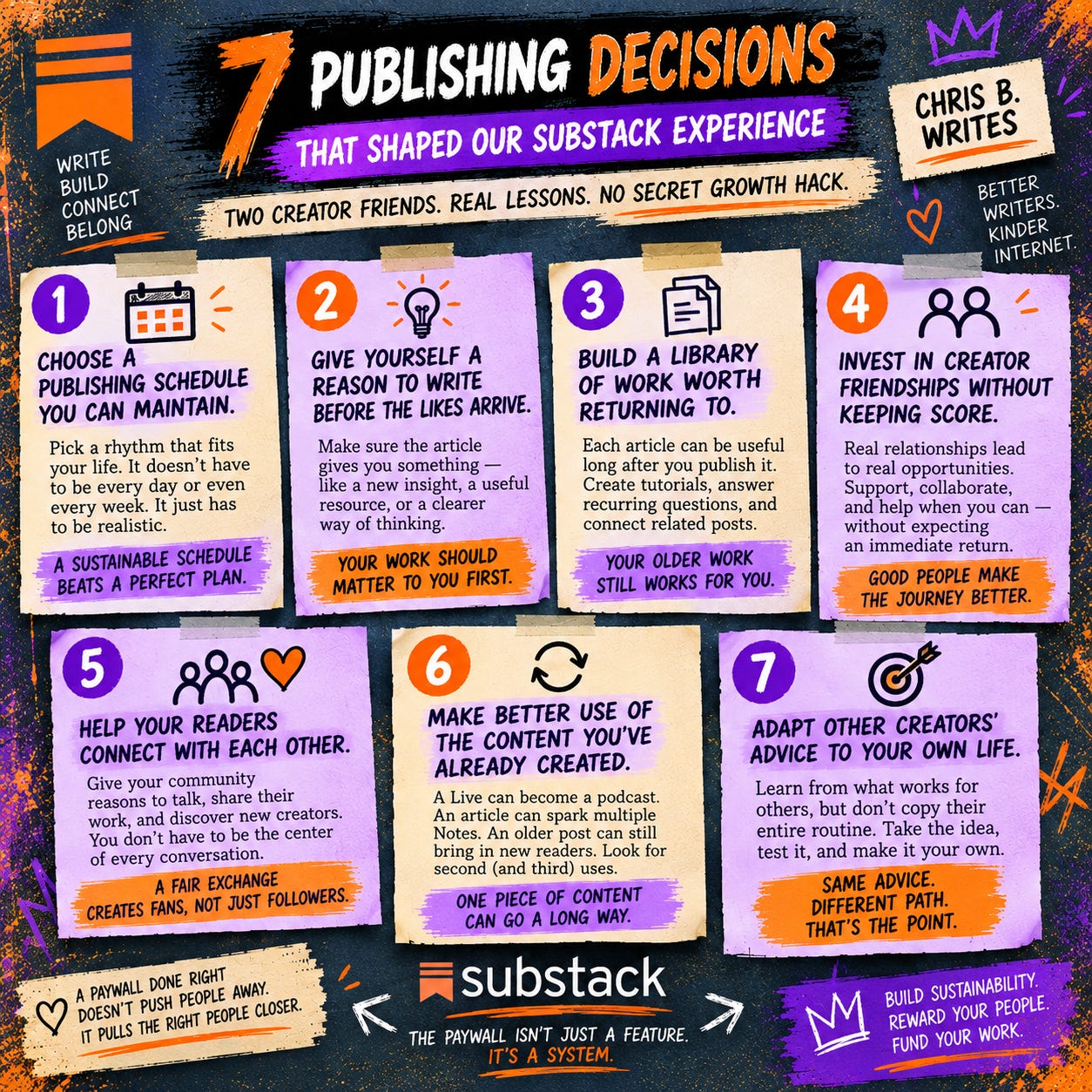
So, What’s The Secret To Substack Growth?
Chris has his 52-plus Mondays and I have my three years of Sundays.
We’ve both published work that received very little attention.
We’ve learned new tools, changed our routines, launched projects, and helped each other figure things out.
I can’t promise that publishing weekly will guarantee a certain number of subscribers.
I can’t promise that every creator friendship will lead to a collaboration and I definitely can’t promise that starting a podcast will make your publication take off, but I can tell you what I see when I look back at our experiences.
Chris kept publishing on Mondays andI kept publishing on Sundays.
He invited me onto my first Live when I wasn’t sure I wanted to do one.
I helped him set up a second publication.
He used my tutorial to launch his podcast.
And a friendship that began because he read something I’d written became part of how we both continued creating.
None of that happened because we’d discovered a secret formula.
→ It happened through decisions we made, adjusted, and kept making.
So if you’re wondering what to do next with your publication, don’t start by trying to copy someone else’s entire strategy.
Choose one decision from this article that would make your own publishing experience better.
Maybe you need a schedule you can actually maintain.
Maybe you need to stop judging every article by its first few likes.
Maybe it’s time to revisit the useful work you’ve already published.
Or maybe there’s a creator you genuinely enjoy talking to, and you should finally ask them how their project is going.
You don’t need to make all seven decisions today.
→ Start with the one that makes sense for you. Then keep going.
One Monday and one Sunday at a time.
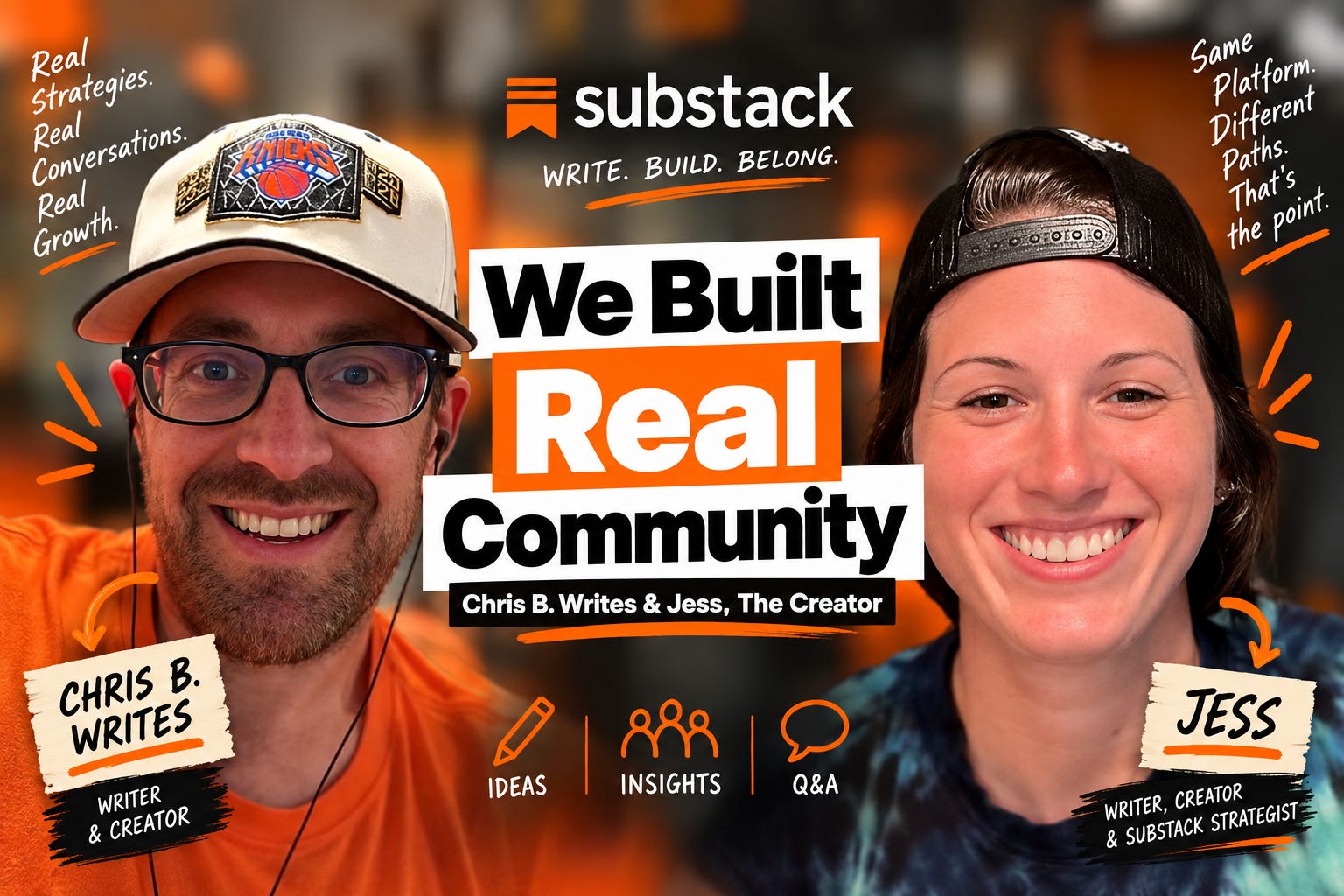
🎥 Watch The Conversation That Inspired This Article
Chris and I reunited on Typing It Real to talk about our friendship, publishing routines, podcasting, building community, and what we’ve learned from our time on Substack.
Watch the live replay here →

You can also follow Chris at Chris B. Writes and Read & Write Poetry with Chris B. Writes →

And if you’re setting up your own publication or figuring out what to do next, that’s what Unstuck to Published is here for. I share tutorials, publishing lessons, and the things I’m learning while building my own publications.
Now I want to hear from you:
Which of these seven publishing decisions are you working on right now? And do you have a Monday, Sunday, or another publishing day you’ve committed to?
Tell me in the comments. 👑
Thank you so much for being here. I truly appreciate you.
— Jessica
Move first. Refine second. Publish with structure.
ICYMI, Previous Articles & Live Episodes →
How To Go Live On Substack The Right Way

This exclusive article was built in collaboration with Chris B. Writes, who implements these strategies and tips every Tuesday during his Substack live show called Typing It Real.
How To Find Substack Notes Ideas Without Starting From Scratch

You open Substack and you decide you should probably post a Note today.

Scan the QR code below to subscribe to Unstuck to Published →

Chris has his Mondays. I have my Sundays. But neither of us started with a secret growth strategy. We started writing, kept learning, and found people who made the work better along the way.
Now I'm curious: Which of the seven publishing decisions are you working on right now?
Is it finding a schedule you can maintain, giving your older articles another chance, or connecting with other creators?
Tell me in the comments. And if you've found a publishing rhythm that works for you, share it! Someone else might need to hear that publishing every day isn't a requirement. 😂👑
What an amazing article, guys! Really a great read after a hard day of work. Keep bringing the inspiration. I'm a fan.